
- All
- Product Name
- Product Keyword
- Product Model
- Product Summary
- Product Description
- Multi Field Search

Views: 112 Author: Site Editor Publish Time: 2025-08-06 Origin: Site


Hydraulic and mechanical forming presses are crucial in precision metalworking, used to shape metals and plastics with high accuracy. While both presses aim for precision, they differ in how they apply force and their suitability for various tasks.
Precision is vital in industries like aerospace, automotive, and electronics, where parts must meet strict specifications. The right press can significantly impact both quality and efficiency in production.
This article compares hydraulic and mechanical presses, focusing on their performance, advantages, and suitability for precision metalworking, helping manufacturers choose the best option for their needs.
A hydraulic forming press shapes materials like metals and plastics using hydraulic force, providing precise pressure control for high-accuracy tasks. It's widely used in industries like aerospace, automotive, and electronics for creating complex parts.
A hydraulic forming press uses Pascal's Law, where pressure is applied through hydraulic fluid to drive pistons that shape materials. This press allows fine control over pressure and speed, ideal for precise shaping.
Hydraulic Cylinders: Contain pistons that generate the force needed for shaping.
Pistons: Apply force evenly to the material, ensuring uniform shaping.
Control Valves: Regulate fluid flow and pressure.
Hydraulic Pump: Circulates fluid to power the system.
Die Set: Holds and shapes the material under pressure.
Hydraulic presses excel in high-precision applications, including:
Automotive Parts: Engine components, body panels.
Aerospace: Lightweight, high-strength parts.
Tooling and Dies: Molds and dies for manufacturing.
Electronics: Small, detailed components.
A mechanical forming press is a machine that uses mechanical force (through gears, cams, or flywheels) to shape materials such as metals. These presses are commonly used for high-speed production, particularly for simpler, high-volume metalworking tasks.
A mechanical forming press operates by using a flywheel or motor to transfer rotational energy to a set of gears or cams, which in turn drive a ram or slider that applies force to the material. The force is typically constant and applied at a high speed, making these presses ideal for mass production. While they are less flexible than hydraulic presses, mechanical presses are more efficient for simple, repetitive tasks.
Flywheel: Stores and releases energy to drive the press's components, providing power to the system.
Cams and Gears: Convert rotational energy into linear motion, moving the ram to apply force to the material.
Ram/Slider: The moving part that directly applies force to the material, shaping it according to the die set.
Die Set: Holds the material and shapes it under the applied force. It’s typically simple in design compared to hydraulic die sets.
Motor: Powers the flywheel and other mechanical components, driving the press operation.
Mechanical presses are ideal for high-speed, high-volume production where parts are relatively simple:
Stamping and Blanking: Used to cut or shape flat sheet metal into standardized shapes like washers, brackets, or other components.
Automotive Industry: Forming parts like chassis and body components where precision is less critical.
Metal Forming: Creating simple metal parts for manufacturing and assembly, such as nuts, bolts, or large structural panels.
Coining and Embossing: For creating uniform parts with detailed patterns or marks.
Choosing the right press depends on the production needs. Both hydraulic and mechanical presses have unique strengths, making them suitable for different tasks.
Hydraulic Presses: Offer variable, controlled pressure, allowing precise adjustments for complex parts and varying material thicknesses.
Mechanical Presses: Apply constant pressure, which limits flexibility, making them less ideal for materials of varying thickness or parts requiring precision adjustments.
Hydraulic Presses: Provide uniform pressure distribution, minimizing deformation and defects, which is crucial for high-precision, intricate shapes.
Mechanical Presses: Force can be inconsistent, leading to uneven shaping, especially for detailed or delicate parts.
Hydraulic Presses: Have slower cycle times, ideal for complex parts requiring precision but unsuitable for mass production.
Mechanical Presses: Faster cycle times, perfect for high-speed, high-volume production of simple parts, but they sacrifice precision for speed.
Hydraulic Presses: Highly flexible and versatile, able to handle a range of materials and complex shapes. Ideal for detailed work and various applications.
Mechanical Presses: Less flexible, best for high-volume, simple tasks, where speed is prioritized over material variety or complexity.
Hydraulic forming presses offer several key advantages, particularly in applications that require high precision and flexibility in shaping metal components.
Hydraulic presses provide precise pressure control, making them ideal for shaping complex and detailed parts. The ability to adjust pressure throughout the forming process ensures that delicate components are shaped accurately, without distortion or defects.
These presses can handle a variety of materials (metals, plastics, etc.) and thicknesses, offering great versatility. Hydraulic systems allow for adjustments to pressure and force, enabling manufacturers to work with diverse materials, from soft plastics to hard metals, and varying material thicknesses without compromising quality.
Hydraulic presses excel in producing intricate geometries and complex shapes. The uniform pressure distribution ensures high accuracy, especially for parts with detailed designs, reducing the chances of defects or inconsistencies in the final product.
By applying uniform and controlled force, hydraulic presses help minimize material waste and reduce defects. The precision of the system means that less material is scrapped, and parts are formed more efficiently, lowering overall production costs.
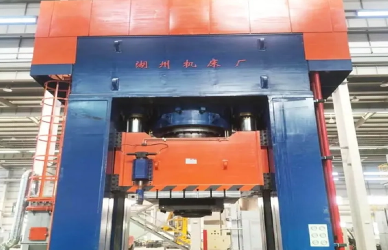
Mechanical forming presses offer key advantages, particularly for high-speed, high-volume applications.
Mechanical presses have fast cycle times, ideal for mass production of simple parts. Their quick operation suits industries needing high output, like automotive and electronics.
Best for simple, repetitive tasks, mechanical presses are efficient at producing standardized parts such as washers or bolts in large quantities.
Mechanical presses have lower initial costs and easier maintenance compared to hydraulic presses. With fewer components, they are more cost-effective to maintain over time.
Mechanical presses excel in tasks requiring simple designs and uniform parts. They are perfect for applications where speed is prioritized over precision or complexity.
Choosing the right press depends on material type, part complexity, production volume, and cost.
Material Type: Hydraulic presses handle a variety of materials, while mechanical presses are best for uniform materials.
Part Complexity: Hydraulic presses are ideal for complex parts, while mechanical presses suit simpler designs.
Production Volume: Mechanical presses excel in high-volume production, while hydraulic presses are better for low-volume or custom jobs.
Cost: Mechanical presses have lower initial costs, while hydraulic presses are more expensive but offer long-term precision.
Opt for a hydraulic press for precision, versatility, and handling complex shapes with varying materials and thicknesses.
Choose a mechanical press for speed and high-volume production of simple parts with less focus on precision.
In summary, both hydraulic and mechanical forming presses offer distinct advantages depending on your metalworking needs. Hydraulic presses provide precise control and are ideal for complex, high-precision work, while mechanical presses excel in speed and high-volume production for simpler parts.
For projects that require flexibility, intricate designs, and high accuracy, a hydraulic press is the ideal choice. However, if your focus is on mass production of simple parts, a mechanical press offers superior efficiency and cost-effectiveness.
Choosing the right press depends on factors such as material, part complexity, production volume, and budget. To ensure you make the best choice, we recommend consulting with experts who can help you select the right equipment based on your specific needs.
For more information on high-quality hydraulic and mechanical presses, or to discuss your requirements further, reach out to Huzhou Machine Tool Works Co., Ltd. Their team of specialists can guide you in selecting the right press to meet your production goals.


