Forging is a key manufacturing process that shapes metal using compressive forces, producing parts with high strength and durability. It's essential in industries like automotive, aerospace, and energy. There are two main types of forging: Open Die Forging and Closed Die Forging, each with unique benefits and applications.
Open Die Forging uses simple or flat dies to shape metal, offering flexibility and suitability for large, custom parts. Closed Die Forging involves complex dies that fully enclose the material, providing high precision and efficiency for mass production of detailed components.
This article will help you understand the differences between these two forging methods, guiding you in selecting the right production line based on your specific needs, whether flexibility, cost-effectiveness, or precision is your priority.
Open Die Forging Overview
1.Definition and Basic Principles
Open Die Forging involves the deformation of metal between flat or simple dies, with the material not fully enclosed. The metal is repeatedly hammered, pressed, or rolled to shape it into the desired form. This method offers greater flexibility in terms of size and shape, as the dies don’t restrict the material’s movement.
2.Suitable Materials and Sizes
Open Die Forging is typically used for large, heavy, or custom parts made from materials such as steel, aluminum, titanium, and other metals. It's ideal for producing components that are too large or complex to be created with Closed Die Forging. Common applications include shafts, rings, discs, and other components requiring precise, custom specifications.
3.Pros and Cons Analysis
Pros:
High Flexibility: This process can produce parts of virtually any size and shape, offering great versatility in design.
Suitable for Large-Sized Parts: Open Die Forging is ideal for creating large components, such as turbine rotors, pressure vessels, and heavy-duty parts.
Cons:
Low Production Efficiency: Because each part is forged individually, production rates are slower compared to Closed Die Forging, making it less efficient for high-volume manufacturing.
Higher Costs: The manual labor and slower production speeds result in higher costs per unit, especially for smaller batch runs. Additionally, the lack of automated processes increases the overall cost.
Closed Die Forging Overview
1.Definition and Basic Principles
Closed Die Forging involves placing metal inside a die cavity that fully encloses the material, with the metal taking the shape of the die as it's compressed. This process uses high-pressure forces to shape the material, producing parts with tight tolerances and consistent quality. Unlike Open Die Forging, the material is fully contained in the die, which allows for greater control over the final shape.
2.Suitable Materials and Sizes
Closed Die Forging is typically used for medium to small-sized components that require high precision, such as automotive parts, aerospace components, and mechanical gears. Common materials include steel alloys, titanium, and other metals that benefit from the high precision and surface finish provided by the process. This method is perfect for mass production of parts where uniformity and quality are critical.
3.Pros and Cons Analysis
Pros:
Suitable for Mass Production: Closed Die Forging is ideal for high-volume manufacturing, as the process is highly automated and efficient once the die is created.
High Product Precision: The enclosed die ensures tight tolerances, making it perfect for parts that require high precision and consistency.
Cons:
High Initial Die Cost: The complexity of the dies used in Closed Die Forging results in significant upfront costs. Custom dies must be designed and manufactured, which can be expensive.
Limited Die Lifespan: Over time, the dies wear down due to the intense pressures used in the forging process, which can limit their lifespan and necessitate frequent replacements or maintenance.
Open Die vs. Closed Die Forging: Comparison
Comparison Factor | Open Die Forging | Closed Die Forging |
Flexibility | High | Low |
Production Scale | Small batches or custom | Mass production |
Cost | Higher | Lower (in the long run) |
Precision | Lower | Higher |
Die Requirements | No die or simple die | Complex die required |
This table summarizes the key differences between Open Die and Closed Die Forging, highlighting factors such as flexibility, production scale, cost, precision, and die requirements. Open Die Forging is more flexible and suitable for custom or small-scale production, while Closed Die Forging excels in mass production with higher precision but comes with higher initial costs for complex dies.
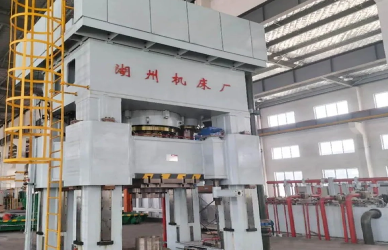
Choosing the Right Production Line
When selecting the right forging production line for your business, several factors need to be considered to ensure the best alignment with your production goals. Here's how to approach the decision-making process based on specific needs:
1. Small Batch/Custom vs. Mass Production
Small Batch or Custom Production: If your business requires producing smaller quantities of highly customized parts, Open Die Forging is often the better choice. It offers greater flexibility, allowing for unique shapes and sizes without the need for complex dies. This is ideal for industries like aerospace or energy, where precision in custom components is essential, and high-volume production is not necessary.
Mass Production: For industries focused on high-volume production, such as automotive or machinery manufacturing, Closed Die Forging is more suitable. It’s highly efficient for producing large quantities of identical parts, with lower cost per unit in the long term due to its automated process. However, it’s important to ensure that the high upfront cost for the dies is justifiable based on the scale of production.
2. Trade-offs Between Cost and Precision
Cost Sensitivity: If minimizing upfront investment is a key concern, Open Die Forging might be the preferred choice, especially for smaller runs. Although the per-unit cost may be higher, the absence of complex die costs means lower initial expenditure. However, for larger-scale production, this may not be sustainable due to the inefficiency of the process.
Precision Needs: If your business requires high precision and uniformity across all products, Closed Die Forging is the superior choice. The enclosed die ensures tighter tolerances and a consistent final product, making it more suitable for parts that require high levels of accuracy and quality, such as those used in critical applications like engines and turbines.
3. Industry Best Practices for Decision-Making
Analyze Production Volume: Companies with large-scale production needs should opt for Closed Die Forging, while those with fluctuating demand or specialized parts should consider Open Die Forging.
Evaluate Product Complexity: If the parts are simple or require minimal precision, Open Die Forging may offer the best cost-efficiency. For highly detailed and precise parts, Closed Die Forging is the ideal choice.
Consider Long-Term Cost Efficiency: While Closed Die Forging involves higher initial costs, it often proves more cost-effective in the long run due to its suitability for large volumes and high precision. For businesses with the capability to invest in the long term, this process will offer better ROI.
Industry Application Cases
Forging is critical in industries that require strong, durable components. Here’s a look at how Open Die and Closed Die Forging are used in key sectors:
1. Automotive Industry
Application: Automotive parts like crankshafts, gears, and suspension components require high strength, making forging ideal.
Best Method:
Closed Die Forging: Ideal for mass-produced parts with high precision, like gears and transmission components.
Open Die Forging: Used for custom, heavy-duty parts in smaller batches, like large structural components.
2. Aerospace Industry
Application: Aerospace parts like turbine blades, landing gears, and structural components demand strength and precision.
Best Method:
Closed Die Forging: Perfect for high-precision, high-quality components like turbine blades and engine parts.
Open Die Forging: Suited for larger, custom parts like wing spars and structural components.
3. Energy Industry (Oil & Gas, Power Generation)
Application: Forged components like pressure vessels, valves, and turbine shafts are essential for energy production.
Best Method:
Open Die Forging: Used for large, custom parts like turbine shafts and pressure vessels.
Closed Die Forging: Best for precision parts like connectors and fasteners in power generation equipment.
FAQ (Frequently Asked Questions)
1.What’s the main difference between Open Die and Closed Die Forging?
The main difference lies in the die usage and production scale. Open Die Forging is more suitable for small batches and custom requirements, while Closed Die Forging is designed for mass production with high precision.
2.Which forging method is better for large-scale production?
Closed Die Forging is more suitable for large-scale production, especially when high precision is needed.
3.What are the disadvantages of Open Die Forging?
Open Die Forging has lower production efficiency, making it suitable for more complex and customized parts. It also tends to be more expensive.
4.Are the die costs high for Closed Die Forging?
Yes, Closed Die Forging requires complex dies, leading to higher initial costs. However, it is more cost-effective in the long run for mass production.
Conclusion
Both Open Die Forging and Closed Die Forging have distinct advantages for different production needs. Open Die Forging is highly flexible, making it ideal for large, custom parts in small batches, but it comes with lower efficiency and higher costs. It’s best for industries like aerospace and energy where customization is crucial. Closed Die Forging, on the other hand, is perfect for high-volume, precise parts, such as those in the automotive or aerospace sectors. While the initial die costs are higher, it’s more cost-effective for large-scale production.
The choice between the two methods depends on production scale, part complexity, and cost. Businesses looking for custom, large parts in smaller volumes will benefit from Open Die Forging, while those requiring high precision and mass production should opt for Closed Die Forging. Understanding these factors helps businesses make informed decisions to optimize both efficiency and quality.


