Die Forging is a critical manufacturing process used to shape metal parts by applying compressive forces with the help of molds, or dies. It is essential in producing components that require high strength, durability, and resistance to wear, making it widely used in industries such as automotive, aerospace, and energy. Precision in die forging is crucial, as even the smallest variation in the forging process can impact the performance and quality of the final product. Achieving tight tolerances and consistent results is essential for ensuring that parts meet strict industry standards. This is where hydraulic presses play a pivotal role. By providing controlled, consistent pressure throughout the forging cycle, hydraulic presses ensure that the material flows accurately and evenly into the die, leading to enhanced precision and improved product quality.
What is Die Forging?
1.Definition and Basic Principles of Die Forging
Die Forging is a manufacturing process where metal is shaped by applying high compressive forces through dies. The metal is heated to a specific temperature to increase its malleability, then pressed or hammered between two dies that define the desired shape. This process improves the metal’s strength and structure, making it suitable for critical applications that require durability and high performance.
2.Open Die Forging vs. Closed Die Forging
Open Die Forging: In this method, the metal is placed between flat or simple-shaped dies. The material is not fully enclosed, allowing it to flow freely and be shaped in multiple directions. This method is ideal for creating larger, custom parts that don’t require intricate details. However, it typically results in lower production efficiency and greater reliance on skilled operators to ensure proper shaping.
Closed Die Forging: Here, the metal is placed in a die cavity that completely encloses the material. The die cavity defines the final shape of the component. This method allows for greater precision and is well-suited for high-volume production of parts with detailed features and tight tolerances, such as automotive and aerospace components. It offers better material utilization and consistency compared to open die forging.
3.Importance of Consistency and Accuracy in Die Forging
Consistency and accuracy are critical in die forging to ensure that each part meets the required specifications. Variations in temperature, pressure, or die alignment can lead to defects such as cracks, air pockets, or dimensional inaccuracies. Achieving uniformity in the forging process guarantees that the final products have consistent strength, quality, and performance, which is especially important in industries like aerospace and automotive, where safety and reliability are paramount.
The Role of Hydraulic Presses in Die Forging
1.How Hydraulic Presses Work: Basic Mechanics and Operations
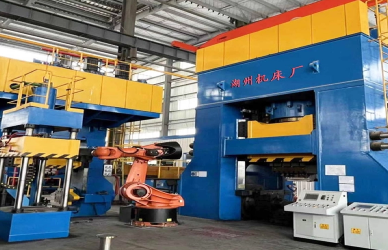
A hydraulic press operates based on the principle of Pascal's Law, which states that pressure applied to a confined fluid is transmitted equally in all directions. In a hydraulic press, hydraulic fluid (usually oil) is pumped into cylinders to generate the required force. The press consists of a large piston and a smaller piston. When fluid is forced into the larger piston, it moves the smaller piston, which then applies pressure to the metal placed in the die. This pressure is what shapes the material into the desired form. The ability to control the flow of hydraulic fluid allows operators to adjust the amount of pressure applied, making hydraulic presses highly versatile.
2.Importance of Hydraulic Pressure Control for Precision in Die Forging
Hydraulic pressure control is crucial for achieving precision in die forging because it allows for accurate and consistent force application. By regulating the pressure exerted by the hydraulic press, manufacturers can ensure that the metal flows evenly into the die cavity without over- or under-deforming. This is particularly important when working with materials that have varying properties or when producing parts that require tight tolerances. The ability to precisely control the amount of pressure at each stage of the forging process ensures that the material is shaped consistently, leading to a higher quality end product.
3.Benefits of Hydraulic Presses in Achieving Consistent Results
Hydraulic presses offer several key benefits that make them ideal for die forging:
Consistency: The hydraulic press can maintain a steady and even pressure throughout the forging cycle, reducing variations in the final product. This is essential for mass production where consistency across multiple parts is critical.
High Precision: The fine control over pressure allows hydraulic presses to achieve tight tolerances, which is essential for industries like aerospace, automotive, and energy, where precision is paramount.
Reduced Material Waste: Because the hydraulic press ensures accurate shaping, material waste is minimized, improving efficiency and reducing production costs.
Flexibility: Hydraulic presses can be easily adjusted to accommodate different materials, part sizes, and complex shapes, making them versatile tools in die forging.
Precision in Die Forging: Why It Matters
1.The Impact of Precision on the Final Product Quality
Precision in die forging directly impacts the quality, performance, and reliability of the final product. Small deviations in dimensions, material distribution, or surface finish can significantly affect a part's functionality, durability, and safety. For example, slight variations in size or shape can result in poor fit, reduced strength, or compromised structural integrity, which could lead to product failure in critical applications. High precision ensures that parts meet stringent industry standards, improve part life cycles, and perform reliably under extreme conditions.
2.Examples of Industries Requiring High Precision
Certain industries demand exceptionally high precision in their components to ensure safety, performance, and efficiency:
Automotive Industry: In automotive manufacturing, parts like gears, crankshafts, and suspension components need tight tolerances to ensure smooth operation, reduce wear and tear, and ensure vehicle safety. A small dimensional error can lead to premature component failure or cause inefficiencies in the vehicle's performance.
Aerospace Industry: The aerospace sector relies on precision-forged parts like turbine blades, engine components, and structural elements. These parts must withstand extreme stresses, high temperatures, and intense vibrations. Even a minor manufacturing defect could jeopardize the safety and functionality of aircraft, making precision crucial.
Energy Sector (Oil, Gas, and Power Generation): Components such as pressure vessels, turbine shafts, and valves used in power plants or oil rigs need to be forged with high precision to handle high pressures, temperatures, and corrosive environments. The performance and safety of energy production depend on the integrity of these components, which must meet exacting specifications.
3.How Precision Affects Part Strength, Fit, and Performance
Strength: Precision forging ensures that the material is evenly distributed within the part, optimizing its strength and resistance to wear. Any inconsistencies in the forging process can create weak points, making parts more susceptible to failure under stress.
Fit: In industries like automotive and aerospace, precision is critical to achieving proper fit and alignment of parts. Even slight inaccuracies in dimensions can cause parts to fail to assemble correctly, leading to increased wear, decreased functionality, and higher maintenance costs.
Performance: Precision impacts how a part performs under real-world conditions. Components that are forged with high accuracy can better withstand thermal and mechanical stresses, improving their overall efficiency. For example, in the aerospace industry, turbine blades forged with precise tolerances can operate at higher temperatures without failure, resulting in better fuel efficiency and overall engine performance.
Advantages of Hydraulic Presses for Precision Forging
1.High Force Capabilities and Consistent Pressure
Hydraulic presses can generate extremely high forces, essential for shaping tough materials. Unlike mechanical presses, they provide consistent pressure throughout the forging cycle, ensuring uniform material shaping and full die filling. This consistency is vital for precision forging, ensuring accurate and reliable results.
2.Enhanced Accuracy and Repeatability
Hydraulic presses allow for precise control over force application, achieving tight tolerances and ensuring each part is consistent. This repeatability is crucial for mass production, especially in industries like aerospace and automotive, where uniformity is essential for part function and safety.
3.Reduced Material Waste and Optimized Production Efficiency
By providing controlled pressure, hydraulic presses reduce the risk of over-forging or under-forging, minimizing material waste. This efficiency not only lowers production costs but also improves throughput by optimizing cycle times and energy consumption.
4.Flexibility in Producing Complex Shapes with Tight Tolerances
Hydraulic presses excel at forging parts with intricate shapes and tight tolerances. Their ability to adjust pressure and stroke length in real-time makes them ideal for producing complex components like gears and turbine blades with high precision, making them invaluable in industries requiring detailed, high-performance parts.
FAQ (Frequently Asked Questions)
1.How does a hydraulic press ensure precision in die forging?
Hydraulic presses provide controlled, consistent pressure, allowing for accurate shaping of materials, reducing variability and improving part quality.
2.What industries benefit most from precision in die forging?
Industries like automotive, aerospace, and energy rely heavily on precision for high-performance, durable components.
3.Are hydraulic presses better than mechanical presses for precision?
Yes, hydraulic presses offer more precise control over force application, making them ideal for producing parts with tight tolerances and complex geometries.
4.What are the main challenges in achieving precision with die forging?
Challenges include maintaining consistent material flow, controlling temperatures, and minimizing die wear, all of which hydraulic presses help mitigate.
Conclusion
Precision is crucial in die forging because even the smallest discrepancies in part dimensions can lead to failures in performance, fit, and durability, especially in industries like automotive, aerospace, and energy. Achieving high precision ensures that components meet strict quality standards, perform reliably under extreme conditions, and reduce the likelihood of defects. Hydraulic presses play a pivotal role in enhancing this precision by providing controlled, consistent pressure throughout the forging process. Their ability to maintain uniformity, reduce material waste, and produce complex shapes with tight tolerances makes them indispensable in high-precision forging operations. When selecting the right press for a high-precision production line, businesses must consider factors like part complexity, material type, and required tolerance levels. Hydraulic presses offer the flexibility, accuracy, and efficiency needed to meet these demands, ensuring optimal results in high-performance industries.


