Metal forming processes play a vital role in modern manufacturing, enabling the production of complex, high-precision parts used in a wide range of industries. Two common methods in metal forming are deep drawing and thin sheet stamping, each serving distinct purposes. Deep drawing is used to shape metal into deep, hollow parts, while thin sheet stamping focuses on cutting, bending, and shaping thin metal sheets for various applications. Hydraulic presses are essential to both processes, providing the necessary force and precision. Choosing the right hydraulic press depends on factors such as material thickness, complexity of the part, and production volume, ensuring optimal efficiency and part quality.
What is Deep Drawing?
1.Definition of Deep Drawing and Its Applications in the Manufacturing Process
Deep drawing is a metal forming process used to create complex, deep, hollow shapes by using a punch and die. The sheet metal is drawn into the die cavity by the punch, forming a part with greater depth than its original width. The process is commonly used to produce seamless, strong, and precise parts that require a high degree of accuracy.
2.Key Components Involved in Deep Drawing: Die, Punch, and Sheet Metal
Die: The cavity into which the sheet metal is drawn. The die defines the final shape of the part.
Punch: The tool that pushes the sheet metal into the die to form the desired shape.
Sheet Metal: The material that is being shaped. It is typically a flat metal sheet that is drawn into the die to create the part.
3.Industries That Benefit from Deep Drawing
Deep drawing is widely used in industries that require the production of complex, high-strength parts with uniform thickness. Key industries include:
Automotive: For manufacturing parts like car door panels, oil pans, and other structural components.
Aerospace: Used to create parts like fuel tanks and fuselage components.
Consumer Electronics: For producing casings for devices and appliances.
What is Thin Sheet Stamping?
1.Definition of Thin Sheet Stamping and Its Uses
Thin sheet stamping is a manufacturing process where thin sheets of metal are shaped, cut, or embossed through a series of punches and dies. This process typically involves high-speed production and is used for parts that require precision and uniformity in their shape. Thin sheet stamping is essential for creating flat, detailed, and high-volume components.
2.Explanation of the Stamping Process: Cutting, Bending, and Shaping Thin Sheets of Metal
In thin sheet stamping, the metal sheet is fed into a die, where it undergoes processes like:
Cutting: Parts are cut to the desired shape using punches and dies.
Bending: The sheet is bent at precise angles to form parts.
Shaping: Complex shapes are formed by applying force to the metal to mold it into the desired configuration.
3.Applications in Industries Like Electronics, Appliance Manufacturing, and Automotive
Thin sheet stamping is commonly used in industries that require high-volume production of small, intricate parts:
Electronics: For making housings, connectors, and components.
Appliance Manufacturing: Used for creating parts like appliance enclosures and brackets.
Automotive: Essential for manufacturing parts such as panels, brackets, and structural components.
Key Differences Between Deep Drawing and Thin Sheet Stamping
1.Material Thickness and Flexibility: Deep Drawing vs. Thin Sheet Stamping Requirements
Deep Drawing: This process is typically used for thicker, less flexible materials. The metal sheet needs to be able to stretch without tearing, as deep drawing involves significant deformation. Materials commonly used for deep drawing are often stronger and have higher formability, such as high-strength steel.
Thin Sheet Stamping: This process is designed for thin, more flexible sheets of metal. Thin sheet stamping works best with materials that have lower thickness and are easy to shape without excessive stretching, like aluminum or steel sheets with smaller gauges.
2.Complexity of the Parts Produced and Tooling Differences
Deep Drawing: Deep drawing is suited for producing complex, deep, and hollow shapes. Parts made through deep drawing often have deep forms, requiring precise tooling to ensure uniform thickness and strength. The dies in deep drawing are typically deeper, and more intricate tooling is required to handle the complexity of the part’s geometry.
Thin Sheet Stamping: Stamping is used for creating shallow, detailed shapes. It is ideal for simpler parts with less depth, such as flat or slightly curved components. The tooling for thin sheet stamping is generally less complex, with the focus on achieving high-speed, cost-effective production.
3.Energy Requirements and Cycle Times for Each Process
Deep Drawing: The deep drawing process generally requires more energy, as it involves pushing the material into a deeper die, creating more resistance. Cycle times are typically longer because of the amount of material that needs to be moved and formed.
Thin Sheet Stamping: Thin sheet stamping tends to be faster and requires less energy, as it involves cutting, bending, and shaping thin materials. The process is optimized for speed and high-volume production, resulting in shorter cycle times.
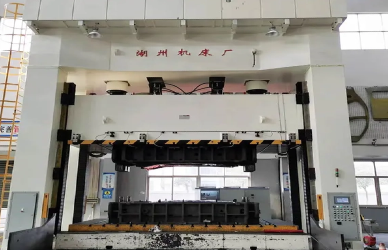
Choosing the Right Hydraulic Press
1.Identifying the Type of Hydraulic Press Needed Based on Material, Complexity, and Volume
Material: Deep drawing presses are best suited for thicker, less flexible materials, while thin sheet stamping presses work well with thinner, more flexible sheets of metal.
Complexity: For complex, deep parts, a deep drawing press is needed. For simpler, flat parts, thin sheet stamping presses are more appropriate.
Volume: Thin sheet stamping presses are ideal for high-volume production runs, given their faster cycle times. Deep drawing presses are often better for smaller production volumes or parts with complex geometries that require higher precision.
2.Comparison of Press Capabilities: Deep Drawing Presses vs. Stamping Presses
Deep Drawing Presses: These presses are designed to handle high-force applications and deeper materials. They offer more control for intricate shapes and are capable of producing stronger, more robust parts.
Stamping Presses: These presses are more suited for high-speed operations and lighter parts. They are optimized for quick, repetitive operations and are highly efficient for creating large quantities of simpler components.
3.Factors to Consider When Selecting a Press: Force, Die Design, Production Speed
Force: Deep drawing presses generally require higher force to push thick materials into the die compared to thin sheet stamping presses.
Die Design: Deep drawing dies need to accommodate deeper and more intricate shapes, while stamping dies are typically simpler and designed for high-speed production.
Production Speed: Thin sheet stamping presses excel in high-volume, fast-paced production environments, while deep drawing presses are better for slower, more complex production runs.
Advantages and Limitations of Each Process
1.Deep Drawing:
Advantages:
Complex Shapes: Ideal for creating deep, hollow shapes with intricate geometries.
Higher Material Strength: The process increases the material's strength, making parts durable and resistant to deformation.
Forming Depth: Best suited for parts requiring significant depth.
Limitations:
Slower Cycle Times: More time-consuming compared to thin sheet stamping.
Higher Tooling Costs: Dies and tooling are complex and expensive.
Material Restrictions: Requires materials with good formability to avoid tearing.
2.Thin Sheet Stamping:
Advantages:
Faster Cycle Times: Optimized for high-speed, cost-effective production.
Lower Material Costs: Thin sheets are less expensive and require less material.
High-Volume Efficiency: Ideal for producing large quantities of parts quickly.
Limitations:
Limited Depth: Not suitable for deep or highly complex shapes.
Less Material Strength: Parts may not be as durable as deep-drawn parts.
Tooling Wear: Dies wear out faster with high-speed production.
Applications of Hydraulic Presses in Metal Forming
1.Common Components Produced by Deep Drawing:
Automotive Parts: Door panels, oil pans, fuel tanks.
Cans: Beverage cans and food containers.
Aerospace: Aircraft fuselages and engine components.
2.Common Components Produced by Thin Sheet Stamping:
Electrical Housings: Circuit board enclosures, connector housings.
Appliance Parts: Refrigerator panels, microwave casings.
Automotive Components: Brackets, panels, trims.
Frequently Asked Questions (FAQ)
1.How do I know if I need a deep drawing or stamping press?
If your parts require deep, complex shapes, a deep drawing press is necessary. For shallow or flat parts with high-volume production needs, a thin sheet stamping press is the better option.
2.Can one hydraulic press be used for both deep drawing and thin sheet stamping?
While it is possible to use a single hydraulic press for both processes, the press must have adjustable tooling and force capabilities. Specialized presses are usually designed for either deep drawing or stamping to ensure optimal performance.
3.What materials are best suited for deep drawing vs. thin sheet stamping?
Deep drawing works best with thicker, less flexible materials, such as high-strength steel. Thin sheet stamping is ideal for thinner, more flexible materials like aluminum, copper, and mild steel.
4.How does cycle time differ between deep drawing and thin sheet stamping?
Thin sheet stamping generally has faster cycle times due to simpler shapes and quicker material forming. Deep drawing takes longer because of the more complex shapes and deeper forming required.
Conclusion
In summary, deep drawing and thin sheet stamping are two distinct metal forming processes, each suited to different manufacturing needs. Deep drawing excels in producing deep, complex parts with higher material strength, making it ideal for automotive and aerospace applications. In contrast, thin sheet stamping is faster, more cost-effective, and better suited for producing shallow parts in high volumes, commonly used in electronics and appliance manufacturing. Selecting the right hydraulic press depends on factors such as material thickness, part complexity, and production speed. Understanding these key differences ensures that manufacturers choose the most suitable press for their specific needs, optimizing efficiency, cost, and part quality.


