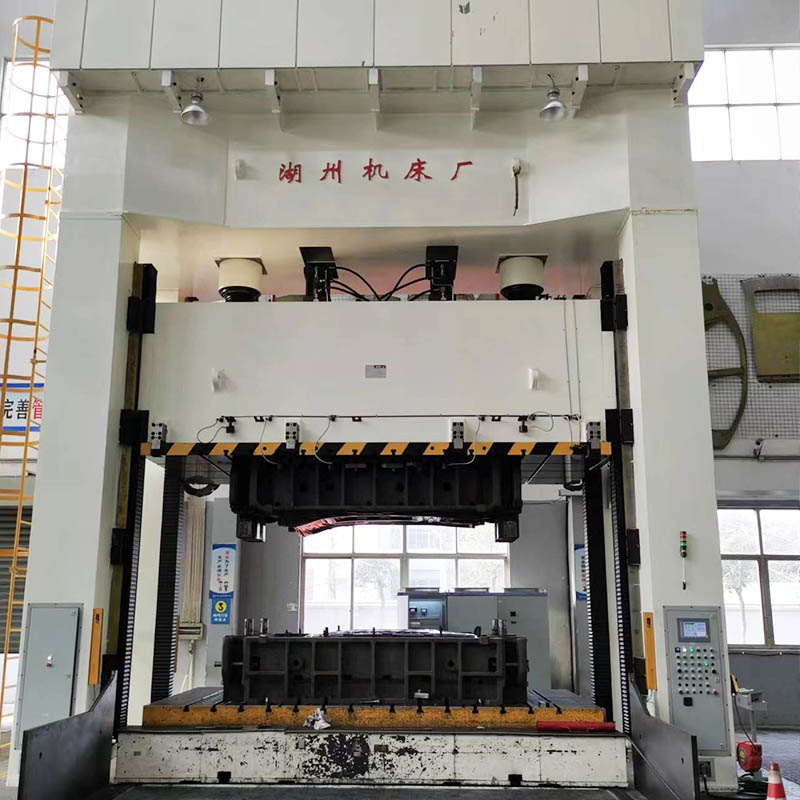
Relying on high-tonnage production presses for mold tryouts disrupts manufacturing schedules. It creates a critical bottleneck in modern tool and die shops. You risk catastrophic tool damage when using aggressive machinery not meant for delicate adjustments. Standard machines lack the finesse required for minute tool corrections. We introduce the HJY98 Series as a definitive solution. It serves as a purpose-built die spotting hydraulic press designed specifically for precision alignment. It allows safe manual inspection and dramatically accelerates tool qualification. Decoupling mold tryouts from main production lines reclaims valuable machine hours for your facility. You also replace dangerous crane-based flipping with automated 180° platen rotation. The equipment accelerates tool acceptance while drastically improving shop floor safety.
Key Takeaways
Operational ROI: Frees up primary production presses, improving overall equipment effectiveness (OEE).
Unmatched Precision: Delivers micro-inching control (down to 0.01mm) and strict platen parallelism for accurate parting-line verification.
Ergonomic Safety: The 180° upper mold flip system allows side-by-side ("booking open") maintenance, eliminating dangerous overhead crane lifts.
Versatile Capacity: Available in 2000 kN to 12000 kN capacities, adaptable for die casting, metal stamping, and plastic injection molds.
The Business Case: Why Standard Presses Fail at Mold Tryouts
Standard stamping and injection presses generate massive, rapid force. They completely lack the micro-inching capability required for delicate mold tryouts. You cannot achieve the ultra-slow, low-pressure control needed on a standard production line. Technicians require this exact control for delicate "kiss contact" alignment. When massive presses close too fast, they smash critical parting lines and destroy expensive tool steel.
Testing molds without precision parallelism systems leads directly to "blind" spotting. Technicians inevitably miss undetected high spots along complex tool surfaces. This oversight causes premature tool wear during real production runs. It leads to severe product flash during initial part sampling. Ultimately, it forces costly, time-consuming rework inside the toolroom.
Tying up a high-volume production press creates a massive financial drain on your factory. Multi-hour bluing and spotting procedures destroy your Overall Equipment Effectiveness (OEE). Every single hour spent testing a mold is an hour you lose profitable output. You sacrifice revenue just to qualify a tool. Establish a dedicated mold tryout press as a non-negotiable asset. It guarantees strict quality assurance. It maximizes your main floor production efficiency.
Core Architecture of the HJY98 Series Die Spotting Press
The structural integrity of the HJY98 press relies on a heavily engineered frame. We design it utilizing a high depth-to-span ratio. This specific architecture provides immense rigidity during the spotting phase. It effectively resists frame deflection during heavy load applications. You maintain perfect geometry even under immense stress. An advanced servo-hydraulic control system drives the machine's core operations. This sophisticated servo system vastly improves slide stopping accuracy. It reacts instantly to command inputs from the operator panel. It also reduces energy consumption during idle maintenance periods. Furthermore, it ensures highly repeatable pressure delivery across multiple test cycles.
The 180° platen flip system revolutionizes how shops handle massive tooling. The downward stroke of the main slide coordinates seamlessly. It works alongside the dedicated turnover mechanism. Together, they rotate the upper mold a full 180°. The mold reaches a completely horizontal, upward-facing orientation. This mechanical marvel enables two technicians to work simultaneously. They comfortably adjust the upper and lower halves side-by-side. We call this the "booking open" position. You eliminate awkward blind spots underneath heavy steel. You completely prevent severe operator back strain. Additionally, a built-in hydraulic cushion system enhances the machine's capability. It accurately simulates realistic drawing and stamping forces during actual tryout runs.
Precision Control & Safety Mechanisms (Risk Mitigation)
Micro-inching capability defines a top-tier piece of toolroom equipment. The machine features a brilliant ±0.01mm positioning display. Technicians rely entirely on this exact visual measurement. It allows them to safely apply colorful bluing agents to the metal. They can slowly lower the slide and check contact surfaces. They use delicate feeler gauges to verify gaps between the plates. You never have to fear crushing the expensive tool steel during these checks.
Electronic encoders continuously monitor the platen alignment. They form a rigid four-point parallelism monitoring network. This network provides active mold protection constantly. If a technician accidentally leaves a wrench or debris inside the die space, the system knows immediately. If it detects uneven resistance across the four corners, the die spotting machine halts instantly. You prevent catastrophic die crashes before they happen.
We must emphasize verifiable safety hardware to protect your team. Redundant safety standards form an impenetrable shield around operators.
Category 4 Dual Light Curtains: These high-grade sensors create an invisible barrier. They stop the press instantly upon any operator entry into the work envelope.
Dual Safety Ratchet Bars: These act as heavy-duty mechanical anti-fall mechanisms. They physically block the massive slide from dropping unexpectedly.
Height-Limited Safety Locks: These robust locks engage automatically during manual spotting. They ensure the platen remains securely suspended while workers reach inside.
Applications: From Manual Spotting to Pre-Production Validation
Bluing and manual spotting remain the absolute primary use cases. Technicians execute low-pressure, incredibly slow-speed closures. They easily identify high and low spots across highly complex parting lines. They grind and adjust the metal until contact becomes perfectly uniform. You can also perform dynamic ejection and core testing on the press. Shops use the machine to rigorously test mold springs. They check lifters and verify core pulls function smoothly. You guarantee perfect mechanical operation well before the mold ever reaches the high-speed production floor.
You can also execute vital small batch pilot runs. The equipment temporarily functions as a highly capable trial production unit. It handles advanced metalforming and demanding deep drawing tasks. It also works perfectly for aluminum die casting validation. You validate the final part geometry perfectly. You achieve this without ever interrupting main line JIT (Just-In-Time) schedules.
This versatility stretches across multiple distinct manufacturing sectors. The equipment serves demanding automotive stamping plants. It supports complex SMC (Sheet Molding Compound) molding operations. It also handles heavy-duty plastics manufacturing with absolute ease. A reliable mold tryout hydraulic press adapts swiftly to diverse industry demands.
Decision Framework: Evaluating Your Mold Tryout Hydraulic Press
Choosing the correct specification requires clear, strategic logic. Tonnage sizing follows a simple, proven rule of thumb. A dedicated tryout system requires significantly less tonnage than your main line. It usually needs only 20% to 30% of the nominal production force. Your primary goal remains light contact verification. You are not pushing for full, violent material deformation. The platform handles this perfectly. It offers a broad capacity range spanning from 2000 kN up to 12000 kN.
You must carefully map features directly to your process requirements.
If your shop requires extreme high precision, you must mandate servo controls. Always insist on encoder-based parallelism systems.
If your tooling feels exceptionally heavy, upgrade your bed configuration. Prioritize rolling bolsters or shuttle beds over standard static platforms.
You should meticulously calculate your Return on Investment. Track several key variables closely to prove the value. Monitor the dramatically reduced scrap rate achieved by eliminating flash. Count the actual days saved during complex tool qualification. Calculate the exact hours of production press time you reclaimed.
Comparison: Production Press vs. Dedicated Tryout Press
Feature / Capability
Standard Production Press
HJY98 Die Spotting Press
Slide Speed Control
Fast, optimized for cycle times
Ultra-slow micro-inching (±0.01mm)
Pressure Application
High force for material deformation
Low pressure for delicate kiss-contact
Ergonomic Accessibility
Poor; dangerous blind spots
Excellent; 180° platen flip opens mold
Parallelism Protection
Basic alignment
Four-point encoder active monitoring
Primary ROI Metric
High volume part output
Fast tool qualification & safety
Implementation Realities & Rollout Considerations
Installing massive heavy machinery dictates harsh physical realities. You must plan extensively for the foundation and footprint. Larger 12000 kN models typically require deep pit installations. These pits accommodate the lower cushions and bolster tracks. Conversely, you can easily floor-mount the lower-tonnage units. Always check your factory floor loading capacity first. Engage civil engineers before delivery day.
Operator adoption requires strategic, empathetic management. Transitioning operators takes patience and clear communication. Moving away from dangerous crane-based mold flipping changes deeply ingrained workflows. Introducing automated platen rotation requires specific safety training. However, it ultimately flattens the learning curve for new technicians. It makes the spotting job fundamentally safer and less exhausting.
Finally, practice strict condition-based maintenance. Set realistic, firm expectations for daily upkeep. Monitor your hydraulic fluid cleanliness regularly. Dirty oil destroys expensive proportional valves. Track your servo system health consistently using the control panel data. You prevent unplanned downtime when you catch mechanical anomalies early.
Conclusion
The equipment represents a deeply strategic investment for any modern facility. It guarantees long-term tool longevity and paramount operator safety. It aggressively expands your overall factory production capacity. Modern manufacturing demands increasingly complex molding processes. You face incredibly tight tolerances every single day. A dedicated piece of tryout machinery is no longer an optional luxury. It stands firmly as a baseline requirement for competitive, profitable tool rooms. Stop risking your expensive production presses on slow, manual spotting tasks. Request a detailed specification sheet today. Schedule a comprehensive tonnage consultation with our engineering experts. Ask for a custom engineering quote to secure your production future.
FAQ
Q: What is the primary difference between a die spotting press and a standard hydraulic press?
A: Extreme low-speed micro-inching, 180-degree mold flipping capabilities, and lower operating pressures optimized for surface checking rather than forming. Standard hydraulic presses close rapidly and lack the safety mechanisms necessary for prolonged manual inspection. A dedicated tryout machine protects both the operator and the delicate tool parting lines.
Q: Can the HJY98 Series be used for actual production runs?
A: Yes, it is capable of short pilot batch production (trial runs) to validate tool performance. The built-in hydraulic cushion simulates actual drawing forces perfectly. However, though it functions well for small batches, its primary ROI is in spotting and tryout procedures rather than continuous high-volume manufacturing.
Q: How do I determine the right tonnage for a mold tryout press?
A: Base it on the maximum size and weight of your molds. Keep in mind that spotting forces are a fraction of the total clamping force required for high-volume injection or stamping. Typically, your spotting press needs only 20% to 30% of the tonnage used by your main production presses.