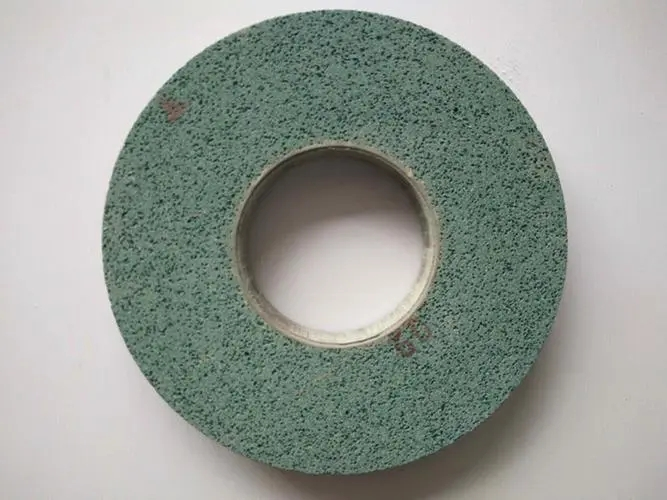
Capital equipment investment in the abrasives industry carries high stakes. Microscopic inconsistencies during the compression phase lead directly to catastrophic wheel failure, high scrap rates, and compromised safety protocols on the shop floor. Facility managers face a constant engineering tension. You must achieve uniform density in abrasive matrices while maintaining aggressive cycle times for profitable grinding wheel production.
Solving this problem requires a technical, evidence-based framework. You must evaluate, specify, and procure an abrasive hydraulic press that meets exact production tolerances. Long-term production requirements depend entirely on the structural rigidity and control sophistication of your chosen machinery. The right equipment stabilizes your process, reduces rejected parts, and ensures every wheel meets strict dynamic balancing standards before it ever reaches the curing oven.
Tonnage is only the baseline: Precise pressure control, platen parallelism, and minimal deflection are the true drivers of grinding wheel quality.
Dust mitigation is non-negotiable: Abrasive environments destroy standard hydraulics; specialized sealing and filtration are required to prevent premature machine failure.
Control systems dictate repeatability: Advanced servo-hydraulics and proportional valve technologies are essential for managing the complex compaction curves of abrasive powders and resins.
Vendor expertise matters: Partnering with a specialized hydraulic press manufacturer who understands powder metallurgy and abrasive compaction significantly reduces implementation risk.
Success Criteria in Grinding Wheel Production
Establishing the physical requirements of high-quality grinding wheels forms the foundation of your equipment specification. A successful press operation must guarantee uniform density across the entire wheel profile. Rotational balance remains the primary objective. Grinding wheels operate at extreme RPMs, often exceeding 4,000 RPM for standard cutoff wheels. Any internal density gradient creates dynamic imbalance. This imbalance causes dangerous vibrations during operation, leading to poor surface finishes on the workpiece and accelerated wear on the grinder's spindle bearings. Structural integrity prevents the wheel from shattering under massive centrifugal forces.
Abrasive grains present a unique compaction challenge. Materials like aluminum oxide, silicon carbide, and ceramic abrasives do not flow easily within a mold cavity. They resist plastic deformation and generate extreme friction against the die walls. Bonding agents, whether phenolic resinoid or glass-based vitrified bonds, complicate this behavior. These mixtures require specific compaction profiles to bind correctly. If you apply pressure too quickly, the abrasive grains bridge together prematurely. This bridging creates internal voids and weak points in the final product, which often go undetected until the wheel fails in the field.
Operators constantly balance cycle time against curing realities. Rapid pressing cycles increase daily output, but abrasive materials require specific dwell times. Dwell time allows the bonding agent to flow around the abrasive grains under pressure. It also provides the necessary window for air evacuation. Forcing a faster cycle traps air inside the matrix. Trapped air leads to blistering and swelling during the kiln firing process. You must configure your press to handle these exact timing requirements without compromising overall throughput.
Defect Type
Visual/Physical Indicator
Root Cause in Pressing Phase
Internal Blistering
Swelling or cracking after kiln firing
Insufficient de-airing cycle; trapped air in the matrix.
Density Gradients
Soft bottom edge; hard top edge
Single-action pressing failing to overcome die wall friction.
Wedge Shape
Uneven thickness across the diameter
Excessive platen deflection or poor frame parallelism.
Edge Cracking
Chipped edges on the green wheel
Jerky ejection mechanism or improper core rod timing.
Core Technologies: Types of Presses for Abrasives
Standard Powder Molding Hydraulic Press
A standard powder molding hydraulic press offers baseline capabilities for basic compaction tasks. These machines typically utilize single-action pressing from the top down. They work well for simple, thin profiles using highly flowable metallic powders. Standard presses feature basic hydraulic circuits, standard platen designs, and minimal dust protection.
However, standard presses face severe limitations in abrasive applications. Highly abrasive materials destroy standard mold clearances and score the die walls. Single-action pressing fails to achieve uniform density in thick grinding wheels. Because the pressure only comes from the top, die wall friction absorbs much of the force before it reaches the bottom of the mold. The bottom layer remains less dense than the top layer. Complex, multi-layered wheel designs require independent control over multiple punch motions, which standard presses simply cannot provide.
Specialized Abrasive Compression Hydraulic Press
An abrasive compression hydraulic press utilizes multi-action pressing mechanics. Both top and bottom compaction rams move independently. This dual-action approach ensures uniform density throughout thick grinding wheels. The pressure applies evenly from both directions, neutralizing the friction against the die wall and ensuring the center of the wheel achieves the same density as the outer surfaces.
These specialized machines integrate floating die tables. The floating mechanism allows the die to move downwards during compaction, further equalizing the density by simulating bottom-up pressure. Specialized ejection mechanisms prevent edge cracking when removing the fragile green wheel from the mold. The hydraulic circuits in these presses feature proportional directional valves that allow for micro-adjustments in ram speed, ensuring the abrasive mix does not shift violently during the initial compression phase.
Hot Pressing vs. Cold Pressing Capabilities
Cold pressing involves room temperature compaction. The press forms a green wheel, which operators later transfer to a kiln for firing. Cold pressing requires immense mechanical force to lock the abrasive grains and dry binders together. The press structure must withstand extreme, repeated shock loads during decompression. When the press releases tonnage, the stored energy in the frame and the compressed abrasive matrix releases instantly. The hydraulic system must feature specialized decompression valves to manage this shock and prevent pipe rupture.
Hot pressing applies simultaneous heat and pressure. This method activates specific resin bonds directly within the mold, often used for high-density cutoff wheels or specialized diamond tooling. The press must handle severe thermal requirements. Heated platens require specialized thermal isolation plates, typically made from glass-reinforced polymers or asbestos-free composites. These plates prevent heat from transferring into the main hydraulic cylinders and degrading the hydraulic fluid. Hot presses also require precise temperature control integrated directly into the machine's PLC, allowing the press to adjust tonnage based on the real-time temperature of the mold.
Automation and Industry 4.0 Connectivity
Modern abrasive presses integrate with robotic loading and unloading systems. Green wheels are incredibly fragile post-compaction. Human handling often causes micro-fractures that remain invisible until the wheel shatters in use. Robotic end-effectors provide gentle, repeatable extraction. Vacuum grippers lift the wheel evenly, preventing localized stress. This automation eliminates human error and accelerates the overall production cycle.
SCADA integration provides essential data logging for traceability. The system records the pressing force, dwell time, and position for every single batch. If a wheel fails in the field, you can trace it back to its exact pressing parameters. Predictive maintenance sensors monitor hydraulic fluid health, particulate contamination levels, and cylinder wear. These sensors alert maintenance teams to replace filters or check seals before a catastrophic failure halts production.
Critical Evaluation Dimensions for an Abrasive Hydraulic Press
Tonnage Capacity and Pressure Distribution
Calculating required tonnage requires specific data. You must know the wheel diameter, thickness, and exact material composition. Abrasive mixes typically require between 1.5 to 4 tons of pressure per square inch of surface area. To find your baseline tonnage, calculate the surface area of the wheel (π × radius⊃2;) and multiply it by the required pressure density. For example, a 14-inch diameter wheel has a surface area of roughly 154 square inches. At 3 tons per square inch, you need 462 tons of force. Always add a 20% safety margin to prevent running the press at maximum capacity constantly, meaning you would specify a 550-ton or 600-ton press for this application.
Even pressure distribution across the entire platen is mandatory. If the press frame flexes under load, the pressure drops on the outer edges of the mold. This creates severe density gradients. The center of the wheel becomes rock hard, while the edges remain brittle and prone to premature wear. Heavy-duty frame construction, often utilizing heavily ribbed cast steel or welded steel plates subjected to finite element analysis (FEA), prevents this uneven distribution.
Platen Parallelism and Deflection Limits
Deflection limits dictate the rigidity of the press under maximum load. You should demand deflection limits no greater than 0.001 to 0.0015 inches per foot of platen span. A rigid frame ensures the top and bottom platens remain perfectly parallel during the entire pressing stroke, regardless of where the mold sits on the table.
Poor parallelism directly causes wedge-shaped grinding wheels. Even a microscopic tilt in the platen creates a wheel that is thicker on one side. When mounted on a grinder, a wedge-shaped wheel creates massive dynamic imbalance. This leads to immediate part rejection during quality control balancing tests. To maintain parallelism, high-quality presses utilize long, precision-machined guide bushings and heavy-duty tie rods pre-tensioned to withstand the maximum pressing force without stretching.
Hydraulic Control Systems, De-airing, and Repeatability
Proportional valves and closed-loop feedback systems are non-negotiable for abrasive compaction. These components provide precise speed and pressure control during the pressing cycle. Linear transducers monitor the ram position in real-time, feeding data back to the PLC. The PLC adjusts the hydraulic flow instantly. This guarantees that every cycle matches the programmed parameters exactly, ensuring batch-to-batch consistency.
Programmable bumping, or de-airing cycles, prevent internal blistering. These are micro-movements executed by the press rams. The press applies initial pressure to consolidate the powder, backs off slightly to let trapped air escape from the matrix, and then applies final compaction force. Without this capability, air remains trapped inside the abrasive matrix, expanding during the curing process and destroying the wheel.
Programmable logic controllers (PLCs) store and execute these complex compaction recipes. Operators can switch between different wheel profiles instantly by selecting a new recipe on the HMI. The PLC ensures multi-step compaction sequences run flawlessly without manual intervention, controlling the exact speed of the ram during the approach, pressing, de-airing, and decompression phases.
Ejection Mechanisms for a Grinding Tool Hydraulic Press
A dedicated grinding tool hydraulic press requires flawless ejection capabilities. Smooth, controlled ejection prevents micro-cracking. If the ejection ram jerks or stutters due to stick-slip friction in the hydraulic cylinders, it damages the uncured grinding wheel. The edges can chip, rendering the part useless before it even reaches the kiln.
Bottom-up ejection systems provide the most stable part removal. Proportional stripping forces allow the press to push the part out gently, overcoming the initial static friction of the die wall without launching the part upward. Core rod controls manage the internal arbor hole of the grinding wheel. The core rod must retract at the precise moment to prevent internal stress fractures during ejection. If the core rod drags against the inner diameter of the wheel, it causes galling and ruins the mounting surface.
Implementation Risks and Mitigation Strategies
Abrasive Dust Mitigation and Machine Longevity
Airborne abrasive dust acts like sandpaper on machinery. It infiltrates hydraulic cylinders, guide bushings, and electrical cabinets. Once inside the hydraulic fluid, abrasive particles destroy pumps and score valve spools within weeks. This risk threatens the entire production line and causes massive hydraulic fluid leaks.
You must specify strict mitigation features. Require positive-pressure electrical enclosures to keep dust out of sensitive electronics and contactors. Install heavy-duty polyurethane wiper seals on all exposed hydraulic cylinders to scrape dust off the rod before it retracts into the barrel. Enclose all linear guides in protective bellows. Isolate the hydraulic power unit away from the main pressing area, preferably in a separate room, to ensure clean air intake for the reservoir breathers.
Foundation and Installation Requirements
High-tonnage presses often require specialized concrete foundations. Some machines need deep pit installations to accommodate bottom hydraulic cylinders and ejection mechanisms. Digging pits causes massive facility disruption. It requires soil testing, structural engineering, rebar reinforcement, and significant downtime for concrete curing.
Conduct structural engineering assessments early in the procurement process. Evaluate the load-bearing capacity and PSI rating of your current floor. Whenever feasible, evaluate pit-less press designs. Pit-less designs mount directly to the floor, utilizing wider frames to house the bottom cylinders above ground. This saves weeks of installation time and reduces facility modification requirements.
Operator Safety and Regulatory Compliance
Hydraulic presses present severe pinch point hazards. Hydraulic failure, such as a blown hose or a stuck directional valve, can cause the upper ram to drop unexpectedly. Non-compliance with OSHA, ANSI, or CE standards exposes your facility to massive fines, liability, and severe operator injury.
Mandate strict safety features on your equipment. Install optical light curtains across all operator access points to halt the machine instantly if a hand enters the pressing zone. Require redundant hydraulic safety blocks that physically prevent the ram from falling during a pressure loss. Implement two-hand controls to keep operator hands away from the tooling area during the manual setup phase. Utilize automated guarding systems that lock physically during the active pressing cycle.
Maintenance Accessibility and Downtime Mitigation
Extended production downtime destroys profitability. Difficult-to-reach hydraulic components turn a simple seal replacement into a multi-day project. Complex manifolds hidden behind structural steel frustrate maintenance teams and delay critical repairs.
Require ergonomic machine designs from your vendor. Manifolds must be accessible from ground level without requiring scaffolding. Specify external filtration loops (kidney loop systems) that allow technicians to change filters and condition the oil without shutting down the main pump. Ensure the machine features clear maintenance access panels with quick-release latches and integrated LED lighting inside the frame for visibility.
Vetting a Hydraulic Press Manufacturer
Proven Track Record in Abrasive Compaction
General metal forming experience does not translate to abrasive compaction. You must partner with a specialized hydraulic press manufacturer. Ask vendors specific questions about abrasive material behavior. Ask how they handle die wall friction, how they design their floating tables, and how their software manages complex de-airing profiles.
Demand concrete proof of their capabilities. Request case studies detailing their work with other grinding wheel producers. Ask for reference contacts. Speak directly with maintenance managers at those facilities to verify machine reliability, the effectiveness of their dust mitigation strategies, and the actual uptime percentage of the equipment.
Factory Acceptance Testing (FAT) Protocols
Never accept a machine without a rigorous Factory Acceptance Test (FAT). The FAT proves the machine meets your exact specifications before it leaves the vendor's facility. Do not rely on dry runs or simulated loads.
Outline a strict FAT checklist. Require the vendor to run your actual production molds using your specific abrasive powder mixes. Verify platen parallelism under full tonnage load using precision dial indicators placed at all four corners of the platen. Test the de-airing cycles to ensure the ram micro-movements function smoothly. Prove cycle repeatability by measuring the density and thickness of consecutive test parts. Only sign off when the press meets every tolerance.
Post-Sale Support and Spare Parts Availability
Machine downtime is inevitable over a decades-long lifespan. Your vendor's post-sale support determines how fast you recover from a component failure. Evaluate their service network location relative to your facility and their guaranteed response times.
Check their remote diagnostic capabilities. Modern presses should allow vendor technicians to log into the PLC remotely via a secure VPN to troubleshoot software issues or adjust valve parameters. Verify lead times for critical hydraulic components. Ensure the vendor uses standard, commercially available valves and pumps rather than proprietary, hard-to-source parts that require months of lead time.
Conclusion
Compile your specific wheel dimensions, material data sheets, and target cycle times to establish a baseline for your equipment needs.
Calculate your maximum required tonnage based on surface area and material density, adding a 20% safety margin for future capacity.
Draft a formal Request for Proposal (RFP) emphasizing strict deflection limits, multi-action compaction capabilities, and heavy-duty dust mitigation requirements.
Shortlist vendors based strictly on their proven track record in abrasive powder compaction and their ability to provide reference contacts in the abrasives industry.
Schedule a comprehensive Factory Acceptance Test using your proprietary molds and material mixes to verify parallelism and de-airing functionality before shipping.
FAQ
Q: What is the ideal tonnage for a grinding wheel production press?
A: The ideal tonnage depends entirely on the surface area and material density of the wheel. Typical machines range from 100 to over 3,000 tons. A basic rule of thumb requires calculating the surface area in square inches and multiplying it by 1.5 to 4 tons, depending on the specific abrasive and bond mixture used.
Q: How does an abrasive compression hydraulic press differ from a standard metalworking press?
A: Abrasive presses feature multi-action compaction to ensure uniform density in thick parts. They maintain extremely stringent deflection limits to guarantee parallelism. Furthermore, they include programmable de-airing cycles to release trapped air and utilize heavy-duty dust sealing to protect hydraulics from abrasive wear.
Q: Why is platen parallelism critical in grinding wheel manufacturing?
A: Uneven pressing caused by poor parallelism creates wedge-shaped wheels. A wheel that is thicker on one side suffers from severe dynamic imbalance. When operated at high RPMs, this imbalance causes dangerous vibrations, making the wheel unsafe and leading to immediate part rejection.
Q: Can a powder molding hydraulic press be used for both resinoid and vitrified wheels?
A: Yes, provided the press controls can adapt to different compaction profiles. Resinoid and vitrified wheels use different bonding agents and require different curing temperatures. The press PLC must be capable of storing multiple recipes to handle the distinct pressure curves and dwell times required for each bond type.
Q: What safety features should be standard on a grinding tool hydraulic press?
A: Standard safety features must include optical light curtains guarding the pressing area. The machine needs mechanical safety catches or redundant hydraulic valves to prevent unintended ram descent. Interlocking physical guards and two-hand control stations are also mandatory to protect operators from pinch points.
Q: How do I protect hydraulic press components from abrasive dust?
A: You must specify specialized rod wipers on all hydraulic cylinders to scrape away dust. Use protective bellows over linear guides and specify sealed bearings. Electrical cabinets require positive-pressure ventilation. Finally, isolate the hydraulic power unit in a separate, clean-air environment away from the main compaction zone.