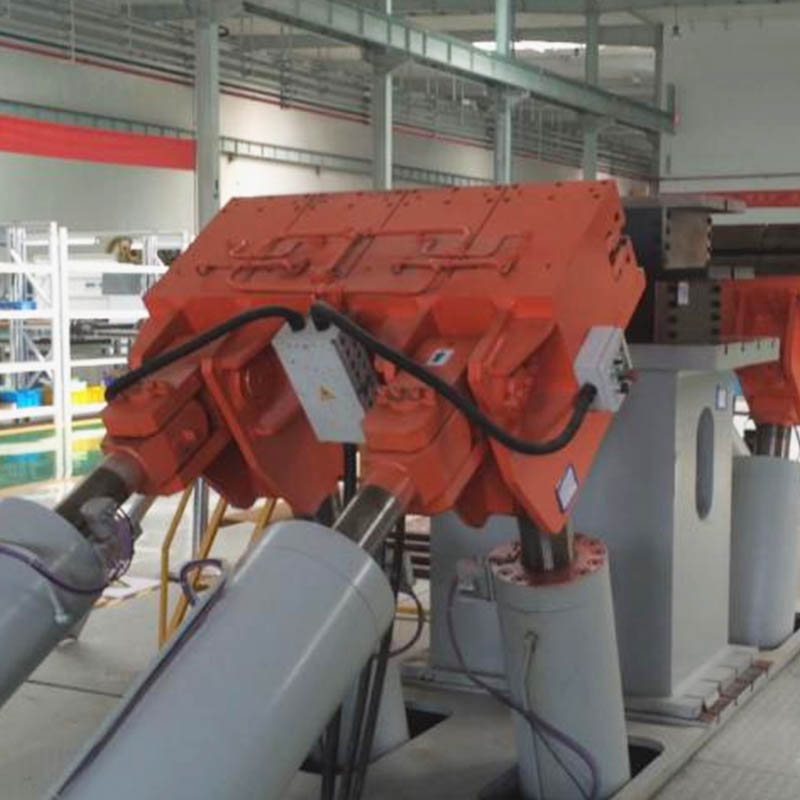
The structural integrity and aerodynamic efficiency of an airframe rely entirely on the precision of its formed sheet metal components. Even minor deviations in contour or material thickness compromise flight performance. Manufacturing engineers and procurement teams must balance strict aerospace tolerances with tooling costs, material yield, and production cycle times. Selecting the wrong forming process leads to excessive scrap rates, unacceptable springback, or bloated capital expenditures on tooling. Evaluating stretch forming vs elastoforming requires a technical breakdown of part geometry requirements, production volumes, and equipment capabilities. We need to determine the most viable path for specific aircraft components. This guide breaks down the mechanics, equipment, and shop-floor realities of both methods.
Application Divergence: Stretch forming is the industry standard for large, sweeping contours like fuselage skins and wing panels, whereas elastoforming excels at producing smaller, complex parts with intricate flanges and shallow draws (e.g., ribs, frames).
Tooling Economics: Elastoforming significantly reduces tooling costs by requiring only a single rigid male die (the rubber pad acts as the universal female die), making it ideal for low-volume or prototyping runs.
Material Utilization: Stretch forming inherently requires excess material for the gripping jaws, leading to higher scrap rates compared to the near-net-shape capabilities of elastoforming.
Equipment Investment: Both processes require substantial capital investment, but the choice between a hydraulic stretch forming press and an elastoforming press aircraft system dictates the facility footprint, thermal capabilities, and operational overhead.
Defining Aerospace Sheet Metal Forming Success Criteria
Aerospace manufacturing demands absolute precision on the shop floor. The criteria for success in aerospace sheet metal forming revolve around strict geometric control and material integrity. Aerodynamic tolerances require smooth, continuous curves. Localized thinning creates structural weak points that fail under cyclic flight loads. Surface marring disrupts laminar airflow across the fuselage or wing. Forming processes must yield pristine surfaces straight off the die. Any secondary rework introduces unacceptable variables into the production timeline and drives up labor costs.
Springback management remains a daily challenge for tooling engineers. Aerospace-grade aluminum, titanium alloys, and high-strength steels possess high yield strengths. They naturally attempt to return to their original flat state after bending. Different forming methods handle this elastic recovery differently. The chosen process must push the material past its elastic limit into the plastic deformation zone. This ensures the final part retains its intended aerodynamic shape after removal from the press. We calculate springback compensation into the die design, but the machine must deliver consistent force to make those calculations work.
Tooling amortization directly impacts program profitability. Engineers evaluate the cost of die creation against the expected lifecycle of the aircraft program. High-volume commercial jet production justifies expensive, permanent steel tooling. Conversely, low-volume defense contracts or prototype runs require agile, low-cost tooling solutions. The selected forming method dictates the material, complexity, and lifespan of the required dies. You cannot afford to machine solid steel blocks for a run of fifty parts, just as you cannot rely on epoxy tooling for a ten-year production contract.
Aircraft Stretch Forming: Mechanics and Capabilities
How the Stretch Forming Process Works
Stretch forming fundamentally alters the stress distribution within a metal blank. The process begins by gripping the sheet metal blank at its opposing edges using heavy-duty serrated jaws. Hydraulic cylinders apply tension to stretch the material beyond its elastic limit. Once the metal enters the plastic state, it wraps over a rigid, convex form block. Some machines pull the metal over a stationary die. Others push the die upward into the tensioned sheet using a massive hydraulic ram.
This method effectively eliminates compressive stresses on the inner radius of the bend. Maintaining continuous tension throughout the forming cycle prevents wrinkling. It also minimizes springback in large panels. Because the entire cross-section of the material is in tension, the neutral axis shifts outside the part. This uniform plastic deformation locks the aerodynamic contour permanently into the metal matrix. We see far fewer contour deviations when the tension is dialed in correctly across the entire sheet.
Equipment: The Hydraulic Stretch Forming Press
Machine architecture varies based on the intended application. Longitudinal stretch presses pull the material along its length. We use these primarily for long extrusions and structural profiles. Transverse stretch presses pull the material across its width. These handle wide, expansive panels. A modern aircraft skin stretching hydraulic press incorporates advanced CNC controls. These systems manage jaw articulation, tension curves, and die movement with absolute precision.
Heat integration capabilities have completely changed how we process hard metals. Forming titanium and advanced high-strength alloys at room temperature often results in cracking or massive springback. Modern machines utilize heated form blocks or localized heating elements. Hot stretch forming lowers the yield strength of the material temporarily. This facilitates severe deformation without fracturing. It reduces the required tonnage and virtually eliminates springback in complex titanium components.
Optimal Aerospace Applications
Stretch forming dominates the production of large exterior components. Primary sheet metal use cases include fuselage skin panels, leading edges, wing skins, and engine nacelle components. These parts require expansive, continuous convex curves. The process scales easily to handle panels spanning several meters in length and width. You simply cannot form a commercial airliner fuselage panel efficiently without this technology.
Beyond flat sheets, aircraft stretch forming is highly effective for structural profiles. Extrusions, stringers, and longerons are stretch-bent into intricate designs. The process prevents the buckling of thin webs during bending. The geometric strengths of this method remain unmatched for large-radius, sweeping contours that define the modern aircraft silhouette.
Elastoforming in Aerospace: Mechanics and Capabilities
How the Elastoforming Process Works
Elastoforming, often referred to as rubber pad forming or the Guerin process, utilizes flexible tooling. A high-pressure rubber or polyurethane pad serves as a universal female die. The sheet metal blank sits over a single rigid male tool block. The press lowers the containment box holding the flexible pad over the blank and die. Extreme hydraulic pressure forces the pad to deform around the block.
This creates isostatic pressure distribution. The flexible pad acts like a fluid. It applies uniform pressure across the entire surface of the metal. It forces the blank to conform exactly to the complex geometries of the rigid die. Once the pressure releases, the pad returns to its original shape. The process excels at creating intricate internal features without the need for matched male and female steel dies. You save weeks of tool-matching time on the bench.
Equipment: The Elastoforming Press Aircraft System
The machine architecture relies on high-pressure hydraulic presses equipped with specialized pad containment boxes. These boxes prevent the polyurethane pad from extruding outward under extreme load. Modern flexforming systems use hydraulic fluid pumped directly behind a rubber diaphragm to generate forming pressure. This ensures consistent force application across the entire bed.
Pressure requirements are immense. Forming high-strength aerospace alloys effectively requires extreme tonnage. Pressures often exceed 10,000 PSI within the containment box. A dedicated elastoforming press aircraft system must feature a massive, rigid frame. It has to withstand these internal bursting forces safely during continuous production cycles. We monitor frame deflection closely to ensure long-term machine health.
Optimal Aerospace Applications
Elastoforming is tailored for internal structural components. Primary use cases include wing ribs, fuselage frames, brackets, covers, and access panels. It is the preferred method for parts requiring localized shallow drawing, flanging, or stiffening beads. The process handles complex internal features with ease.
The geometric strengths of elastoforming lie in its versatility. It is superior for parts with sharp radii, multiple directional bends, and intricate edge details. Because the rubber pad flows around the tool, it can form undercuts and complex contours that would trap a rigid steel die. This makes it indispensable for manufacturing the dense structural skeleton of an aircraft.
Stretch Forming vs Elastoforming: Core Evaluation Dimensions
Tooling Costs, Production Speed, and Lead Times
Stretch forming requires large, highly polished, and structurally robust form blocks. These dies are often cast from iron, steel, or heavy composite materials to withstand immense tension. This results in higher initial capital costs and longer lead times for tooling procurement. Standard cold stretch forming offers rapid cycle times once the machine is set up. However, integrating heat extends cycle times due to necessary heating and cooling phases.
Elastoforming drastically reduces tooling costs. It requires only one rigid male die. Because the rubber pad absorbs the impact and distributes pressure evenly, dies can be machined from lower-cost materials. Aluminum, epoxy, or even 3D-printed composites are common. This allows for faster iteration and prototyping. However, individual cycle times per part may be longer due to the extreme hydraulic pressurization and decompression phases required for each stroke.
Material Yield and Scrap Rates
Material utilization is a major financial metric in aerospace manufacturing. We track scrap rates meticulously to control program budgets.
Stretch forming inherently requires significant grip allowances. Excess material must be left at the edges for the hydraulic jaws to hold securely.
This gripped material is heavily deformed and must be trimmed away after forming.
This results in lower material yield and higher scrap costs. This becomes highly visible when forming expensive titanium or specialized alloys.
Elastoforming operates much closer to near-net shape. Minimal edge allowance is required because the part does not need to be gripped and pulled. The blank is simply placed on the die. This maximizes material utilization and significantly reduces scrap rates. For components manufactured from high-cost aerospace materials, this yield advantage often offsets the longer cycle times.
Surface Finish and Aerodynamic Quality
Surface finish dictates aerodynamic performance. Stretch forming is susceptible to die marks if the form block is not perfectly polished or adequately lubricated. Friction between the metal and the die can cause galling. Furthermore, the tension applied can cause micro-thinning across the apex of the curve. We use strict process control to maintain minimum thickness tolerances.
Elastoforming offers superior surface protection. The rubber pad inherently protects one side of the sheet metal from tooling marks. This preserves the delicate clad layer on aerospace aluminum. It ensures a pristine surface finish that rarely requires secondary polishing. The uniform pressure distribution also prevents localized thinning, maintaining consistent material thickness throughout the formed part.
Part Size and Scalability
Physical dimensions often dictate the forming method. Stretch forming is the only viable option for massive aircraft skin forming. Panels spanning several meters for commercial fuselages cannot be formed any other way. The machines scale horizontally to accommodate massive extrusions and wide sheets.
Elastoforming is strictly limited by the size of the press bed and the containment box for the rubber pad. While some large flexforming presses exist, they are generally restricted to smaller structural components. Scaling an elastoforming press to handle a full fuselage panel is technically impractical and financially prohibitive due to the required tonnage.
Evaluation Dimension
Stretch Forming
Elastoforming
Primary Application
Large exterior skins, sweeping curves, extrusions
Small internal structures, ribs, frames, flanges
Tooling Cost
High (Requires large, robust, polished dies)
Low (Requires single die, can use cheaper materials)
Material Yield
Lower (Requires excess material for gripping jaws)
Restricted (Limited by press bed and containment box)
Implementation Risks and Mitigation Strategies
Managing Material Thinning and Tearing
Every forming process carries inherent material risks. Over-stretching in a hydraulic stretch forming press leads to localized thinning, compromising structural integrity. Conversely, excessive pressure in elastoforming can cause tearing at sharp radii or deep draws. Material failure results in immediate scrap and production delays.
Mitigation relies on digital simulation. Utilizing Finite Element Analysis (FEA) software allows engineers to simulate the forming process virtually. FEA helps optimize die design, predict thinning zones, and establish precise hydraulic pressure curves before physical production begins. This digital twin approach eliminates trial-and-error scrap on the shop floor. We run simulations for every new part number before cutting any hard tooling.
Equipment Maintenance and Consumables
Heavy machinery requires rigorous upkeep. Stretch forming requires continuous maintenance of the hydraulic gripping jaws. Worn jaw teeth lead to slippage. Slippage during high-tension forming causes catastrophic part failure and poses a severe safety risk to operators. Regular inspection and replacement of jaw inserts are mandatory.
Elastoforming relies heavily on consumables. The polyurethane or rubber pads degrade over time under extreme cyclic pressure. They can harden, crack, or chunk out. Degraded pads fail to apply uniform pressure, leading to incomplete forming or wrinkling. Operators must track pad life cycles and schedule periodic replacements to maintain consistent production quality.
Operator Expertise and Automation
Historically, sheet metal forming relied heavily on operator intuition. Reliance on tribal knowledge for manual press operation leads to inconsistent batches. Variations in manual tension control or pressure application result in unpredictable springback and out-of-tolerance parts.
Mitigation requires modernizing equipment. Investing in CNC-driven presses with closed-loop feedback systems is essential. These automated systems monitor tension, yield points, and pressure in real-time. They adjust parameters dynamically to ensure repeatable cycles. This removes human error from the equation and guarantees aerospace-grade consistency across thousands of cycles.
Conclusion
Conduct a thorough part catalog analysis to categorize components by size, geometry, and material yield requirements.
Run FEA simulations on the most complex components to validate the chosen forming method before cutting physical dies.
Consult with specialized aerospace press manufacturers to determine exact tonnage, thermal capabilities, and footprint requirements for your facility.
Calculate the total tooling amortization costs based on the projected lifecycle and volume of the specific aircraft program.
FAQ
Q: What is the primary difference between stretch forming and elastoforming?
A: Stretch forming grips the metal edges and pulls it under tension over a rigid die to create large, sweeping curves. Elastoforming uses a high-pressure flexible rubber pad to press a metal blank over a single rigid male die, ideal for complex, smaller parts with flanges and shallow draws.
Q: Why is stretch forming preferred for aircraft skin forming?
A: Stretch forming maintains continuous tension across the entire panel, which eliminates compressive stresses and prevents wrinkling. This process locks in the aerodynamic contour, minimizes springback, and easily scales to handle massive exterior panels spanning several meters.
Q: Can an elastoforming press handle titanium aerospace parts?
A: Yes, but it requires massive tonnage. Titanium has a high yield strength. Forming it requires extreme hydraulic pressure within the containment box. Some applications may also require heated dies to lower the material's yield point temporarily during the elastoforming cycle.
Q: How does tooling cost compare between a hydraulic stretch forming press and an elastoforming press?
A: Elastoforming tooling is significantly cheaper. It requires only one rigid male die, often made from low-cost aluminum or composites. Stretch forming requires massive, highly polished, and structurally robust dies made from steel or cast iron to withstand high tension.
Q: What are the material waste differences between stretch forming and rubber pad forming?
A: Stretch forming generates more waste because it requires excess material at the edges for the hydraulic jaws to grip. Elastoforming operates closer to near-net shape, requiring minimal edge allowance, which maximizes material utilization and reduces scrap costs.
Q: How do manufacturers control springback in aerospace sheet metal forming?
A: Manufacturers control springback by pushing the material past its elastic limit into the plastic zone. Stretch forming achieves this via tension. Elastoforming achieves this via extreme isostatic pressure. Heat integration is also used for titanium to reduce yield strength and eliminate springback.
Q: Can stretch forming machines be used for extrusions as well as sheet metal?
A: Yes. Longitudinal stretch forming machines are specifically designed to grip and stretch-bend structural profiles, extrusions, stringers, and longerons. This prevents the thin webs of the extrusions from buckling or wrinkling while forming intricate aerospace designs.