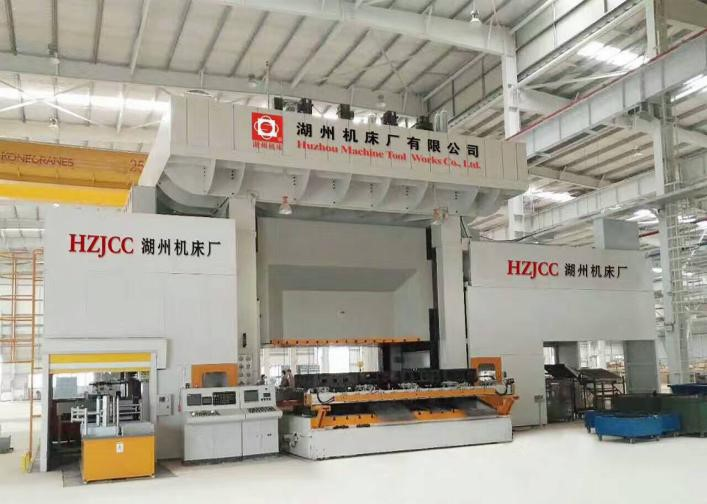
Modern manufacturing demands both speed and rigorous precision. Fragmented single-action pressing setups often create severe bottlenecks on the factory floor. Moving parts manually between disconnected stations wastes valuable time. It also increases labor overhead and introduces frequent handling defects. Transitioning to a continuous, automated transfer setup eliminates these core inefficiencies. The HJY27-TF series emerges as a formidable solution. Engineers rely on this equipment to power high-volume, multi-stage stamping operations globally. By combining multiple operations into one unified footprint, it dramatically maximizes output yield.
This article provides an objective, engineering-focused framework. You will evaluate whether this equipment aligns with your specific facility throughput, tooling demands, and compliance requirements. We will explore structural rigidity, automation synchronization, and crucial implementation realities. By the end, you will understand how to properly assess a stamping production line upgrade for your organization.
Key Takeaways
Throughput Consolidation: The HJY27-TF series replaces multiple single-station presses, reducing work-in-progress (WIP) inventory and labor overhead.
Technical Baseline: Success relies on matching the machine's eccentric load capacity and bed size with your specific multi-station die configurations.
Automation Dependency: True ROI requires seamless synchronization between the automatic hydraulic press controls (PLC) and multi-axis transfer feed mechanisms.
Implementation Risk: Transitioning to a stamping production line demands rigorous tooling adaptations and reinforced foundation planning.
Analyzing the Business Case for a Continuous Stamping Production Line
Facilities often struggle to scale output using isolated machinery. Upgrading to a continuous automated system requires significant capital. You must justify this investment through clear operational metrics.
Defining the Bottleneck
Disconnected stamping cells suffer from notoriously low Overall Equipment Effectiveness (OEE). Manual loading creates unpredictable cycle times. Operators must physically move parts from blanking to drawing, and then to trimming stations. This disjointed flow creates large piles of work-in-progress (WIP) inventory. Comparing these legacy setups against a unified multi-station hydraulic press reveals stark differences. A consolidated system standardizes cycle times. It minimizes micro-stops and pushes OEE from an average of 55% up to 85% or higher.
Floor Space vs. Output Yield
Space on the manufacturing floor remains a premium asset. Traditional setups require distinct presses for blanking, drawing, punching, and trimming. They also demand ample aisle space for forklifts and WIP storage bins. Consolidating these distinct stages into one HJY27-TF press cycle drastically cuts the required footprint.
Below is a typical comparative chart illustrating the spatial and operational differences:
Metric
Traditional 4-Press Cell
HJY27-TF Multi-Station System
Total Floor Space
Approx. 120 sq. meters
Approx. 45 sq. meters
WIP Storage Areas
3 designated zones required
Zero intermediate storage
Cycle Time Variance
High (operator dependent)
Near zero (machine paced)
Output Yield
Prone to human handling errors
Consistent, automated precision
Labor and Handling Reduction
Manual inter-press part transfers introduce significant risks. Handling damage accounts for a major percentage of scrap rates in legacy shops. Dropped parts or improper alignments ruin expensive materials. Furthermore, moving heavy sheet metal repeatedly causes severe ergonomic hazards for workers. By implementing a continuous line, you eliminate these physical transfer tasks. Operators shift from manual labor to process supervision. This protects your workforce and elevates overall part quality.
Core Engineering Specifications of the HJY27-TF Press
Evaluating an industrial press requires looking past raw tonnage. You must scrutinize the structural and kinematic engineering driving the machine.
Frame Rigidity and Eccentric Load Management
Multi-station tooling inherently creates uneven force distribution. Station one might perform a heavy draw, while station four executes a light trim. This causes severe off-center loading. The HJY27-TF utilizes a straight-side (H-frame) structural design to combat this issue. Tie-rod construction provides massive rigidity. It prevents the frame from yawning or twisting under asymmetric stress.
Deflection tolerances strictly govern part precision. Engineers typically look for deflection limits around 0.15mm per meter of bed length under full load. Excessive deflection accelerates die wear and produces out-of-spec parts. The H-frame design minimizes this deflection. It keeps the slide parallel to the bolster plate even during aggressive, off-center hits.
Tonnage Distribution and Bed Dimensions
Nominal tonnage means little if the machine cannot distribute it effectively. You must map out how force disperses across the entire bolster plate.
Establishing criteria for matching bed length requires precise calculations. You should follow these steps:
Calculate the total number of required transfer stations.
Determine the physical width of each individual die block.
Establish the required pitch distance (the transfer leap between stations).
Add clearance space for clamps and transfer rails.
If your pitch distance requires 300mm across five stations, the total bed length must comfortably exceed 1500mm. Proper bed sizing ensures the multi-station tooling fits securely without crowding the uprights.
Hydraulic System and Kinematic Control
Modern fluid power relies on sophisticated valve blocks. The HJY27-TF integrates advanced proportional valve technology to govern slide velocity. This enables a highly controlled kinematic profile. The slide executes a fast approach to minimize cycle time. It then slows to a controlled pressing speed before contacting the material. Finally, it utilizes a rapid return stroke to clear the die space quickly.
Continuous duty cycles generate immense heat. Effective thermal management of the hydraulic power unit prevents fluid degradation. Heat exchangers maintain oil viscosity within an optimal range. This stabilizes system pressure and ensures repeatable stroke accuracy across endless production shifts.
Integrating the Automatic Hydraulic Press with Transfer Systems
A press standing alone generates zero revenue. True automation relies on flawlessly connecting the press to material handling systems.
Transfer Feeder Synchronization
Automation demands perfect timing. A automatic hydraulic press must talk to the transfer system seamlessly. Electronic handshakes occur constantly between the machine's Programmable Logic Controller (PLC) and the servo transfer system. A 2-axis or 3-axis transfer feed mechanism moves the parts horizontally, vertically, and laterally.
Absolute encoders play a mandatory role here. They track the exact position of the press slide in real-time. The system uses closed-loop control algorithms to monitor these positions. If the transfer bars fail to retract in time, the PLC instantly halts the press slide. This millisecond-level synchronization absolutely prevents catastrophic die crashes.
Coil Feeding and Scrap Management
Upstream integration feeds the entire beast. You cannot run a high-speed line without properly staged raw materials. Integration requires heavy-duty decoilers to hold massive steel coils. Motorized straighteners remove the coil set, flattening the metal before stamping. Servo feeders then push exact increments of material into the first blanking station.
Scrap management often becomes a forgotten bottleneck. Continuous punching generates tons of off-fall. Uninterrupted production necessitates robust under-bed scrap removal solutions. Vibratory conveyors or motorized scrap belts must sit beneath the bolster plate. They carry slugs and off-cuts away automatically, preventing jams inside the die space.
Implementation Realities and Operational Risks
Theoretical throughput looks excellent on paper. However, practical deployment uncovers numerous operational hurdles. You must anticipate these challenges early.
Tooling Adaptation and SMED
Retrofitting existing single-station dies for a transfer setup carries hidden costs. You cannot simply bolt old dies onto a new press bed. Transfer lines require standardized pass lines. Die heights must match precisely across all stations. You often need to machine custom riser plates or modify tool shoes to align them.
Single Minute Exchange of Die (SMED) compliance heavily dictates your uptime. Lengthy changeovers destroy profitability. We strongly recommend implementing hydraulic clamping systems. Push-button clamping secures tools in seconds. Moving bolster configurations allow operators to stage the next die set outside the press. Once a run finishes, the old die rolls out, and the new one rolls in immediately.
Foundation and Infrastructure Requirements
A heavy-duty HJY27-TF press generates massive kinetic energy. Standard factory floors will crack under the dynamic load. You must excavate and pour a reinforced concrete pit. Pit design requires thorough soil analysis and structural engineering.
Vibration isolation pads are non-negotiable. They decouple the machine's shockwaves from the surrounding building structure. Furthermore, you must upgrade your facility's infrastructure. Evaluate your electrical load capacity to support the massive hydraulic pump motors. Plan for safe hydraulic fluid volume staging and bulk oil storage nearby to streamline maintenance fills.
Safety and Compliance Standards
Automated presses require impenetrable safety architectures. Adhering to standards like ISO 16092-3 or local OSHA directives prevents severe accidents. You must assess all perimeter guarding.
Key safety implementations include:
Light Curtains: Optical sensors across all open access points instantly halt the machine if broken.
Safety Interlocking: Guard doors must feature dual-channel interlocks wired directly to the emergency stop circuit.
Slide Locking Mechanisms: Mechanical locks must engage automatically when operators enter the die space for maintenance.
Evaluation Framework: Shortlisting the HJY27-TF
Purchasing capital equipment requires a strategic checklist. You need definitive parameters to justify shortlisting this specific machine model.
Volume Thresholds
Transitioning to an automated transfer line makes financial sense only at specific volume thresholds. Low-volume, high-mix environments might struggle to justify the setup time. You must identify your minimum annual production volumes. Typically, operations pushing hundreds of thousands of parts annually reap the highest benefits. High volumes absorb the initial capital expenditure rapidly, pushing the system into profitability.
Application Fit
You must differentiate between process requirements. The HJY27-TF excels in deep drawing applications. Deep drawing requires highly controlled pressing speeds to stretch metal without tearing. The hydraulic architecture delivers full tonnage throughout the entire stroke. This contrasts with mechanical presses, which only reach peak tonnage at bottom dead center. However, if your exclusive goal involves ultra-high-speed, thin-sheet blanking (e.g., 200 strokes per minute), a mechanical press might prove more suitable. Evaluate the HJY27-TF specifically for its immense drawing capabilities and variable speed control.
Next Steps for Procurement
A successful equipment purchase begins with sharing accurate data. Approaching a manufacturer requires a prepared dossier. Outline the specific data needed for a thorough consultation:
Part Drawings: Provide 3D CAD models of the final formed parts.
Material Specs: Detail the tensile strength, yield strength, and thickness of the sheet metal.
Stroke Rate Requirements: Define your target parts-per-minute metric.
The HJY27-TF multi-station hydraulic press operates as a high-yield asset only when thoughtfully integrated. Simply buying the machine guarantees nothing. You must match it perfectly with appropriate tooling and robust transfer automation.
We reiterate the strict necessity of a complete system audit prior to procurement. You must evaluate the press, the servo feeder, and the multi-station dies as one cohesive ecosystem. Overlooking one component jeopardizes the entire production line.
Finally, direct your engineering team to request specific technical documents. Always demand tonnage-to-bed-size load curves and detailed layout drawings from the manufacturer. Analyzing these documents provides the objective proof needed to ensure the equipment handles your exact application demands.
FAQ
Q: What is the typical cycle rate for the HJY27-TF series in a multi-station setup?
A: Cycle rates vary heavily based on application. They depend directly on stroke length, maximum draw depth, and the transfer pitch speed. For shallow draws and short strokes, the system can achieve relatively fast cycles. Deep drawing requires slower, controlled pressing speeds, which naturally reduces the overall parts-per-minute output. The transfer mechanism's acceleration limits also dictate the maximum cycle rate.
Q: Can existing progressive dies run on an HJY27-TF automatic hydraulic press?
A: Generally, no. Progressive dies rely on the continuous metal strip to carry parts between stations. Multi-station transfer setups cut the blank completely at the first station. Mechanical transfer fingers then move the loose part. Running a progressive die requires different structural adaptations, specific strip feeding alignment, and pilot pins, which differ entirely from transfer die architecture.
Q: What are the standard maintenance intervals for the main hydraulic cylinders?
A: Maintenance depends heavily on duty cycles and operating temperatures. You should conduct baseline visual seal inspections monthly to check for weeping. Comprehensive fluid analysis should occur every six months to detect particulate contamination or viscosity breakdown. Complete cylinder rebuilds and major seal replacements typically fall into a three-to-five-year preventative maintenance schedule.
Q: Does the HJY27-TF support independent hydraulic cushions for different stations?
A: Yes, multi-station pressing often requires variable draw depths across the bed. The system can support independent hydraulic cushions or CNC-controlled bed cushions. This allows operators to program different cushion pressures for individual stations. It provides exact material flow control exactly where the specific die section needs it.