Capital expenditure on heavy manufacturing equipment is a high-stakes decision where the initial sticker price rarely reflects the full financial impact. Miscalculating required specifications, underestimating operational costs like energy and maintenance, or opting for substandard build quality leads to production bottlenecks, high scrap rates, and degraded profit margins. A machine that cannot hold tolerance under load will directly damage your production output and client relationships.
To make a defensible procurement decision, engineering and purchasing teams must evaluate the true cost drivers of a hydraulic press machine. You need to analyze everything from raw material construction and frame architecture to advanced servo-driven automation. You must also factor in CNC integration, fluid management requirements, and the reliability of manufacturer support networks.
Baseline costs are dictated by tonnage capacity and frame style (e.g., C-frame vs. four column), but precision requirements, structural rigidity, and raw material market volatility drive exponential price increases.
Integration of advanced technologies, such as servo-driven pumps and automated material handling, increases initial CapEx but drastically reduces long-term OpEx through energy efficiency, regulatory compliance, and cycle time reduction.
Long-term operational expenses extend far beyond the machine itself, encompassing rigging, foundation requirements, hydraulic fluid management, and preventative maintenance.
Evaluating a hydraulic press manufacturer requires scrutinizing their component sourcing (proprietary vs. off-the-shelf), safety compliance standards, and post-sale service infrastructure.
Baseline Cost Drivers for a Hydraulic Press Machine
Tonnage Capacity and Physical Dimensions
Pressing force requirements dictate the foundational expense of the equipment. Force equals pressure multiplied by area. To achieve higher tonnage, engineers must either increase the hydraulic system pressure or increase the cylinder bore size. Increasing the bore size requires massive steel forgings for the cylinder body. Pushing system pressure higher demands specialized high-pressure pumps, heavy-wall seamless tubing, and robust flange fittings. Both approaches add significant weight and manufacturing expense.
The physical dimensions of the working area also push expenses upward. Expanding the bed size and the daylight opening requires exponentially more material. The frame must resist the pressing force without stretching or bending. Engineers measure this in bed deflection, typically aiming for strict tolerances like 0.001 inches per foot. Achieving this rigidity across a large bed requires incredibly thick steel plates for the crown, bed, and side housings. If you widen the bed without thickening the steel, the frame will deflect under pressure, destroying your tooling and producing out-of-spec parts.
Frame Architecture and Structural Integrity
Frame style dictates both performance capabilities and baseline pricing. C-frame models are open on three sides, offering excellent access for operators and material handling. However, they naturally tend to yawn or open up under heavy loads. To counteract this, builders must add massive amounts of steel to the throat area, but some deflection remains inevitable. Straight-side frames command a premium because they use a fully enclosed box-like structure. They offer near-zero yaw and utilize multi-point square gibs to guide the ram, ensuring perfect parallelism for high-precision stamping.
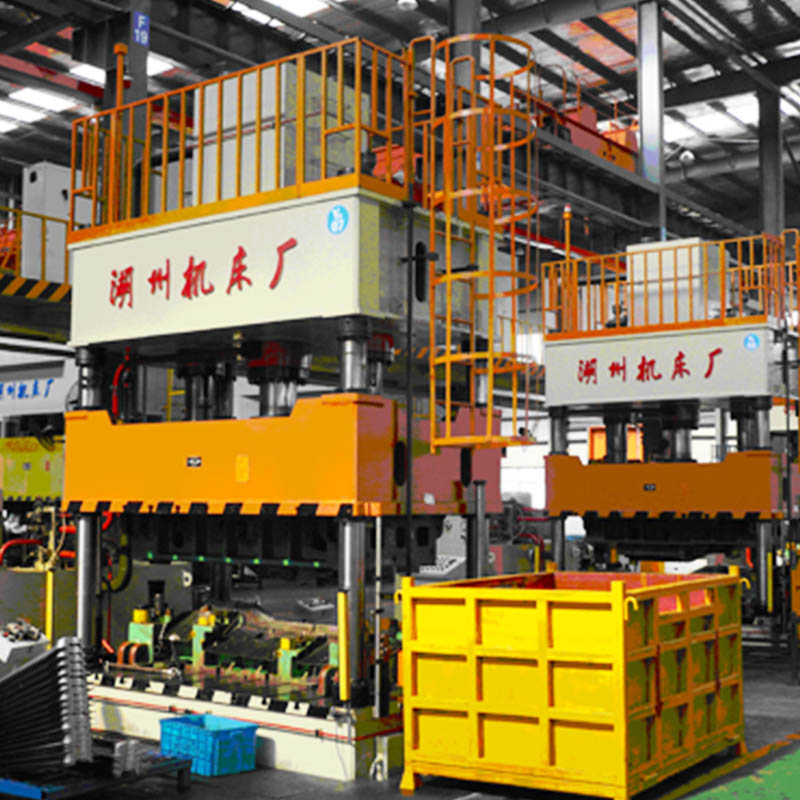
A four column hydraulic press offers a highly effective middle ground. It uses four massive threaded tie rods to connect the crown and the bed. These rods are pre-tensioned using hydraulic nuts to stretch them slightly, creating a rigid structure that distributes force evenly across a large platen area. This design is highly cost-effective for deep drawing and composite molding.
Frame Architecture
Relative Acquisition Cost
Structural Rigidity
Ideal Application
C-Frame (Gap Frame)
Lowest
Moderate (Prone to yaw under high load)
Assembly, riveting, light coining
Four-Column
Moderate
High (Excellent uniform pressure)
Deep drawing, composite molding
Straight-Side
Highest
Maximum (Near-zero deflection)
High-precision stamping, progressive dies
Material quality and thermal processing heavily impact the base price. Advanced high-strength steels resist fatigue much better over millions of cycles than standard mild steel. Furthermore, thermal stress-relieving processes during manufacturing are non-negotiable for precision equipment. Heating the massive welded frame in an annealing oven relieves internal weld stresses. Skipping this step saves money initially but guarantees frame deflection and cracking later.
Raw Material Volatility and Market Dynamics
Heavy machinery is fundamentally tied to commodity markets. Steel is bought by the pound. A large industrial press can easily weigh over 80,000 pounds. When global hot-rolled steel plate prices fluctuate, the base cost of the machine swings wildly. Manufacturers must pass these material increases down to the buyer, which is why heavy equipment quotes are often only valid for a short window.
Supply chain economics for specialized components also play a major role. The main hydraulic cylinders are often forged from high-grade alloy steel rather than cast. Forging aligns the grain structure of the metal, preventing catastrophic failure under high-cycle fatigue. When demand for heavy industrial forgings outpaces foundry capacity, lead times stretch and prices surge. Copper prices also directly affect the cost of the massive electric motors required to drive the hydraulic pumps.
Technological Complexity and Control Systems
Conventional vs. Servo Hydraulic Press Systems
Control system technology represents a major fork in the procurement path. Conventional presses use a standard AC induction motor spinning at a constant speed. It drives a variable displacement piston pump. When the press is idle or holding pressure, the motor continues to spin, dumping oil over a relief valve and generating massive amounts of heat. This wasted energy requires large cooling systems to prevent fluid degradation.
A servo hydraulic press replaces this setup with a servomotor coupled directly to a fixed displacement gear pump. The motor only spins when fluid flow is required. If the ram needs to hold pressure for a ten-minute cure cycle, the servomotor stops spinning completely, holding pressure with zero energy waste. The drives and motors for this setup are highly complex and carry a higher initial acquisition cost. However, they provide power on demand, significant noise reduction, and highly precise ram speed control.
Automation and Material Handling Integration
Integrating ancillary equipment transforms a standalone machine into an automated production cell. This integration requires significant capital for robotic loading arms, automated transfer rails, and scrap conveyors. You must follow a strict sequence when evaluating automation integration:
Assess current cycle time requirements to determine if robotic loading is necessary to meet production quotas.
Evaluate die change frequency to justify the expense of quick die change (QDC) systems and hydraulic clamping.
Map out scrap removal paths to determine the size and placement of automated under-bed conveyors.
Integrate safety interlocks between the press PLC and the automation cell to ensure operators are locked out during autonomous operation.
Program handshake signals between the press controller and the robotic arms to synchronize ram movement with part placement.
Automation offsets its high initial investment rapidly. Automated cells increase production rates, eliminate operator fatigue, and ensure consistent part placement every single cycle. You reduce your reliance on manual labor, which lowers ongoing payroll expenses and minimizes human error.
Precision, CNC, and Data Acquisition (Industry 4.0)
Modern manufacturing demands micro-level accuracy. Standard limit switches provide repeatability of perhaps 0.050 inches. Upgrading to linear encoders that read a glass or magnetic scale gives you position feedback down to 0.0005 inches. Proportional directional valves use linear variable differential transformers to monitor the exact position of the valve spool. The PLC updates this control loop every millisecond, allowing for incredibly precise force and speed profiling.
Data logging requirements further increase complexity. Aerospace, automotive, and medical hydraulic forming press applications often require strict traceability. You need specialized data acquisition software to record pressure, position, and time for every single part produced. This requires high-end PLC platforms and dedicated industrial servers, adding a significant premium to the machine build.
Customization vs. Standard Off-the-Shelf Models
The Premium on a Custom Hydraulic Press
Standard models benefit from economies of scale. The engineering is already complete, the manufacturing jigs are built, and the bill of materials is standardized. A custom hydraulic press carries hidden costs that standard models avoid. If your die is taller than the standard daylight opening, the engineering team must redraw the side housings, recalculate the finite element analysis, and write new CNC programs for the boring mills.
You are paying for specialized engineering hours. Mechanical engineers must design custom manifold blocks drilled from solid steel. Electrical engineers must write custom PLC logic from scratch. Evaluate if your facility should absorb this cost. If modifying your internal tooling is cheaper than customizing the press, choose the standard industrial hydraulic press. Only pursue custom builds when the specific application demands unique tonnage profiles, extreme bed sizes, or highly specialized material handling.
Tooling and Die Interfaces
The interface between the machine and your tooling affects the final quote. Deep drawing requires a bed cushion. This is a secondary hydraulic cylinder mounted under the bed that pushes up against the blank holder, controlling material flow and preventing wrinkles. Integrating heated platens is necessary for composites and rubber molding. This requires specialized multi-zone temperature controllers, cartridge heaters, and insulated bolsters to prevent heat from transferring into the machine frame. Each of these interfaces adds mechanical and electrical complexity.
Hidden Expenses and Long-Term Operational Costs
Energy Consumption and Regulatory Pressures
Lifetime power costs often exceed the initial purchase price of the machine. You must evaluate power consumption based on your specific duty cycle. Standard induction motors draw heavy current constantly. Inefficient systems turn wasted energy into heat. Hydraulic systems generate significant heat under pressure, and you must cool the oil to keep it below optimal operating temperatures. Water-over-oil heat exchangers require a constant flow of chilled water, while air-over-oil coolers use large electric fans. Both cooling methods consume additional energy.
Environmental compliance is forcing facilities to rethink energy consumption. Increasing regulatory pressure on industrial carbon emissions changes the math. Facilities must track kilowatt-hour usage and peak demand charges. Lowering your daily energy draw protects your margins against rising utility rates and ensures compliance with regional energy efficiency mandates.
Maintenance, Fluid Management, and Downtime Risks
Recurring upkeep costs are unavoidable. Hydraulic oil is the lifeblood of the system. Large reservoirs hold hundreds of gallons of specialized fluid. You must invest in high-efficiency kidney loop filtration systems to keep this fluid clean. Proportional valves are highly sensitive to contamination. Dirt or degraded oil destroys expensive pumps and scores cylinder walls.
The financial impact of faulty equipment is severe. Pressure inconsistencies lead directly to out-of-tolerance parts. If a valve sticks or a seal leaks, the ram will not reach the programmed force. This degrades product quality and increases scrap rates. Delayed production damages client relationships. Buying a cheaper machine with unreliable components costs more in lost production than you save on the initial purchase.
Shipping, Installation, and Rigging
Logistical realities are frequently overlooked during procurement. A press standing twenty feet tall cannot ship vertically on a highway. It must be laid down on a specialized multi-axle lowboy trailer. You need highway patrol escorts and route surveys to avoid low bridges. Foundation requirements also add massive expenses. Large presses often require deep pit construction, reinforced concrete pads, and epoxy grouting for leveling pads to handle the dynamic loads.
Installation requires hiring specialized rigging services. Riggers use heavy-lift hydraulic gantries and specialized cranes to stand the equipment up safely. The electrical and mechanical connection process takes days or weeks. These installation and rigging expenses must be calculated upfront to avoid budget overruns.
Evaluating and Selecting a Hydraulic Press Manufacturer
Supply Chain and Component Sourcing
The origin of internal components dictates long-term reliability. Warn your procurement team against white-labeled machines that use proprietary, hard-to-source replacement parts. If a builder uses a proprietary manifold block with custom-machined valve cavities, you cannot buy a replacement valve from a local fluid power distributor. You are entirely dependent on the original builder.
Emphasize the long-term cost benefits of a reputable hydraulic press manufacturer. Look for builders that utilize standard, commercially available hydraulic and electrical components. Brands like Rexroth, Parker, and Allen-Bradley are globally supported. If a standard directional valve fails on a Tuesday, you can buy a replacement locally and be running by Wednesday. Standard component sourcing protects your uptime.
Warranty, Compliance, and Post-Sale Support
Navigating safety compliance is a mandatory expense. You must meet OSHA and ANSI safety standards. Required safety features add to the machine's cost. Light curtains protect operator hands during the stroke. Physical safety blocks prevent the ram from falling during maintenance. Redundant pilot-operated check valves ensure the ram will not drop if a single valve fails. Never cut costs on safety compliance.
Evaluate the financial value of the manufacturer's service infrastructure. A domestic service network is critical for minimizing unplanned downtime. Look for builders who offer remote VPN access. A technician can log into the PLC from their office, look at the ladder logic, and tell you exactly which proximity switch failed. Guaranteed response times for service technicians are highly valuable. Strong post-sale support justifies a higher initial purchase price.
Conclusion
Audit your current cycle times and scrap rates to establish a baseline for required equipment upgrades.
Calculate acceptable energy expenditures based on your regional utility rates and expected machine duty cycles.
Request detailed, itemized operational projections from shortlisted manufacturers rather than accepting simple base quotes.
Verify that all quoted machinery utilizes globally available, non-proprietary electrical and fluid power components.
FAQ
Q: What is the average lifespan of an industrial hydraulic press?
A: A well-maintained industrial press can operate reliably for 20 to 30 years. Lifespan depends heavily on the operating environment, duty cycle, and adherence to preventative maintenance schedules. Regular fluid analysis, filter changes, and seal replacements significantly extend the operational life of the equipment.
Q: How much does a custom hydraulic press cost compared to a standard model?
A: Custom models require significant engineering hours. This typically results in a substantial premium over standard models. The exact increase depends on the complexity of custom manifolds, specialized frame dimensions, and unique software requirements necessary for your specific application.
Q: Why is a servo hydraulic press more expensive than a conventional one?
A: Servo systems utilize advanced, high-torque servo motors and sophisticated motor drives. These components cost significantly more to manufacture and program than standard continuous-run induction motors. However, they provide precise control and massive energy savings that offset the initial premium.
Q: What maintenance factors most heavily affect the long-term cost of a hydraulic forming press?
A: Fluid management is the most critical factor. Degraded or contaminated oil destroys expensive pumps and valves. The recurring costs of high-quality fluid, absolute-rated filtration systems, and routine oil sampling are the primary maintenance expenses that dictate long-term reliability.
Q: How do regional safety and energy regulations impact the final price of the machine?
A: Strict safety regulations require redundant valving, light curtains, and physical guarding, which increase manufacturing costs. Energy regulations may force facilities to purchase highly efficient servo-driven models to meet carbon emission targets, raising the initial acquisition expense.
Q: What is the difference in cost and application between a C-frame and a four column hydraulic press?
A: C-frames are generally less expensive and provide three-sided access, making them ideal for light assembly. Four-column presses cost more due to increased material and machining requirements, but they offer superior uniform pressure distribution necessary for deep drawing and large platen applications.